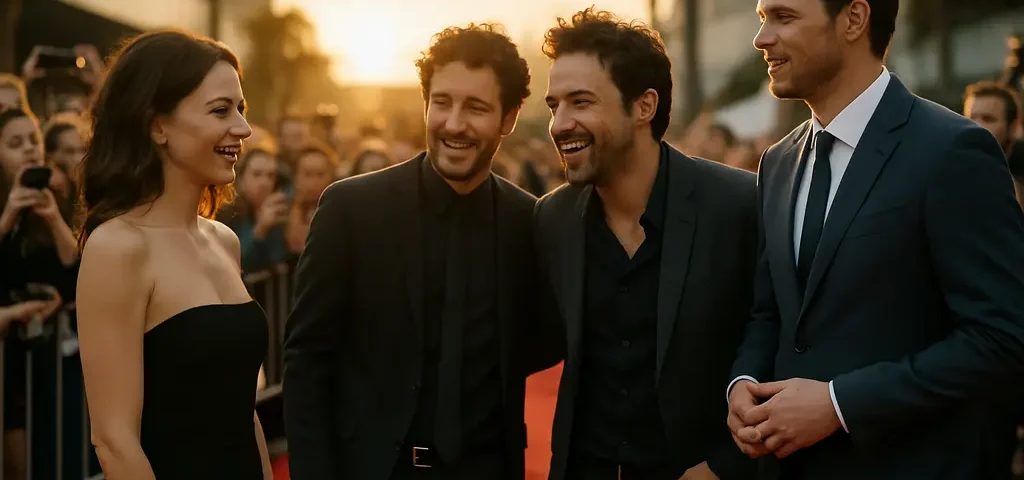
The Nashville Film Festival finished its 57th edition on September 30, 2026, after running from September 24 across multiple arts venues in Nashville. Confirmed by the festival: the program presented over 150 films from around the globe, a scale that placed local Tennessee work beside international narrative, documentary, music, short-form, episodic, music video, and screenwriting categories on the official festival site. Reviewed from the award record, the 2026 edition did not point to a single dominant trend. It showed several connected priorities: regional authorship, music-centered nonfiction, new-director recognition, and short-film categories with possible Academy Award consideration. Market analysis: those signals matter because regional festivals often shape early audience trust before a film reaches wider distribution or another awards setting.
Nashville Film Festival Awards And Audience Signals
What Nashville Film Festival Awards Signal
Confirmed: the formal awards ceremony took place on September 27, 2026, at the National Museum of African American Music. That date matters because the awards arrived before the full festival closed on September 30, giving winners several days of added attention inside the event itself. Market analysis: when a festival announces awards before its final screenings end, the recognition can shift audience curiosity toward prize-winning titles without guaranteeing future sales, reviews, or nominations.
Confirmed: Hot Water, directed by Ramzi Bashour, won Best Narrative Feature. A City in the Forest, directed by Lev Omelchenko and Nolan Huber, won Best Documentary Feature. Jail Time Records, directed by Dione Roach and Steve Happi, won Best Music Documentary Feature. Crystal Cross, by Richie James Follin, won Best New Directors Feature. Where the Hell Is Anna?, directed by Taylor Dupuis, won Best Tennessee Feature.
At the Nashville Film Festival, those feature awards separated recognition across form and cultural position rather than treating one prize as the only major marker. A narrative feature, a documentary feature, a music documentary, a new-director work, and a Tennessee-connected film each received a distinct point of visibility. Opinion: that structure is useful for audiences because it gives different entry points into the program. A viewer interested in regional work may follow the Tennessee Feature category, while a viewer tracking emerging filmmakers may place more weight on Best New Directors Feature.
- Confirmed: Best Narrative Short went to Gender Studies, directed by Jamie Kiernan O’Brien.
- Confirmed: Best Documentary Short went to Memories of a Window, by Mehraneh Salimian and Amin Pakparvar.
- Confirmed: Best Animated Short went to With Tapes and Toasts in the Car, by Kiana Naghshineh.
- Confirmed: the inaugural Mary Jane Coleman Award went to Take Me Home by Liz Sargent.
- Confirmed: the Nashville PBS Human Spirit Award went to Stray Embers, directed by Erin Brethauer and Tim Hussin.
- Confirmed: Best Original Song, the Widelitz Music in Film Award, went to “How Long” from The Life Cycle of a Grey Ant, with music and lyrics by Theo Porcet, Tanguy Meunier, Sam Avant, and Caraz.
Confirmed: the screenwriting competition also recognized Filthy by Lisa Cole for Drama Feature Script, Middlescence by Angela Manfredi for Comedy Feature Script, Felt by Ran Jing for Horror Feature Script, and No Peace I Find by Hyten Davidson and Christian Missonak for Genre Feature Script. Market analysis: including screenplay winners in the same awards conversation widens the festival’s cultural function. It recognizes completed films and projects still in written form, which can help audiences see film culture as a chain of development rather than only a finished-screening event.
Regional Identity, Music, And New Voices
Tennessee Winners And Local Legibility
Confirmed: Tennessee talent appeared through the Best Tennessee Feature win for Where the Hell Is Anna? and the Best Tennessee Short win for My $3,500 Jacket. Market analysis: this matters because regional categories do not only reward geography. They can help audiences identify which films carry local knowledge, local production ties, or local cultural reference points. For a festival rooted in Nashville, that kind of recognition can make the event legible to residents as more than a traveling showcase of outside work.
Opinion: regional awards can also correct a common imbalance in festival attention. International and national titles often arrive with stronger press materials, known festival records, or more established teams. A Tennessee category creates a formal space where local films are not merely competing for leftover attention. This connects with Biff Award’s prior analysis of regional film recognition, where local prizes were treated as audience-trust signals rather than small substitutes for larger awards.
Music As A Structural Category
Market analysis: The Nashville Film Festival also treated music as more than atmosphere. The 2026 awards included Best Music Documentary Feature for Jail Time Records and Best Original Song for “How Long” from The Life Cycle of a Grey Ant. Confirmed by the award record, music documentary features, original song recognition, and music videos were part of the broader festival mix. That fits Nashville’s public identity, but the cultural meaning is more specific: music becomes a form of documentary subject, narrative texture, and craft recognition.
Reviewed reading: the inaugural Mary Jane Coleman Award added another notable signal. The prize was described in the research record as honoring a woman filmmaker or producer whose work shows innovation, distinctive perspective, and collaboration, and it went to Liz Sargent’s Take Me Home. Cautious analysis: one new award cannot prove a full institutional shift by itself. Still, its creation places women’s authorship and collaborative practice into the award structure, which is a more durable statement than a one-time panel or promotional theme.
Confirmed: juries included international festival programmers, critics, distributors, and academics. Market analysis: that jury mix suggests the awards were not only built for local celebration. They also brought in evaluators tied to criticism, distribution, education, and programming. The result is a dual audience: Nashville viewers encountering work in person, and industry-adjacent observers reading the awards as signals of possible future interest.
Hybrid Access After The In-Person Dates

Virtual Screenings Ended On October 5
Confirmed: the in-person festival dates ended on September 30, 2026. Confirmed: the virtual catalog listed some online viewing through October 5, 2026, on the 2026 virtual catalog. Because today is October 6, 2026, those online screenings have already ended. This should be described retrospectively, not as an invitation to view films now.
Market analysis: the virtual extension shows how hybrid access remained part of festival practice after the physical event. It did not replace the venue-based festival, the September 27 awards ceremony, or the social experience of screenings. Instead, it functioned as a supplement, giving selected films a longer window for viewers who could not attend during the core dates or who needed a different viewing schedule.
Opinion: hybrid access can change how audiences experience festival authority. A prize announced in a room may reach one group immediately, while an online window allows another group to respond after the ceremony. That second layer can widen participation, though the research does not provide viewing numbers, audience demographics, completion rates, or sales outcomes. Without those figures, any claim about expanded reach must stay cautious.
Audience analysis: the short-film categories carried extra weight because the Narrative Short, Documentary Short, and Animated Short winners were eligible for Academy Award consideration through the festival’s qualifying status. Eligibility is not the same as a nomination, and it should not be treated as a prediction. Still, for filmmakers and viewers, the status changes the meaning of those categories. A short-film award at this event may become part of a longer awards path, which can increase attention to formats that often receive less commercial visibility than features.
For insights on audience habits across streaming and reality television, check out True Real TV, which provides a valuable perspective on how audiences transition from festival content to on-demand viewing options at home. Market analysis: such transitions are part of the broader audience pattern highlighted by the 2026 festival data, indicating that online access persisted beyond in-person events and concluded on October 5.
What The Nashville Film Festival 2026 Record Shows
The Nashville Film Festival 2026 record shows a regional event balancing several identities at once. Confirmed: it awarded films across narrative, documentary, music documentary, Tennessee-connected work, shorts, original song, and scripts. Confirmed: it used jury input from programmers, critics, distributors, and academics. Confirmed: it maintained a virtual component beyond the physical dates. Those facts point to a festival trying to serve filmmakers, local audiences, and industry readers without collapsing those audiences into one group.
Opinion: the most meaningful pattern is not any single winner but the way the awards divide attention. Hot Water and A City in the Forest mark core feature recognition. Jail Time Records and “How Long” keep music in the center of the festival’s identity. Crystal Cross and the Mary Jane Coleman Award point toward new voices and women’s leadership. Where the Hell Is Anna? and My $3,500 Jacket keep Tennessee authorship visible. The shorts add a possible awards-season pathway, while the script categories recognize work before production has reached the screen.
Cautious analysis: the research does not provide audience polling, buyer activity, critic scores, box office, streaming deals, or filmmaker interviews. It would be unsound to claim that these winners have secured wider distribution or major awards momentum from the festival alone. What can be said is narrower and more useful: the 57th edition created a public record of films and scripts that the festival’s juries chose to elevate, and those choices reveal a program interested in local identity, music culture, emerging filmmakers, and post-event access.