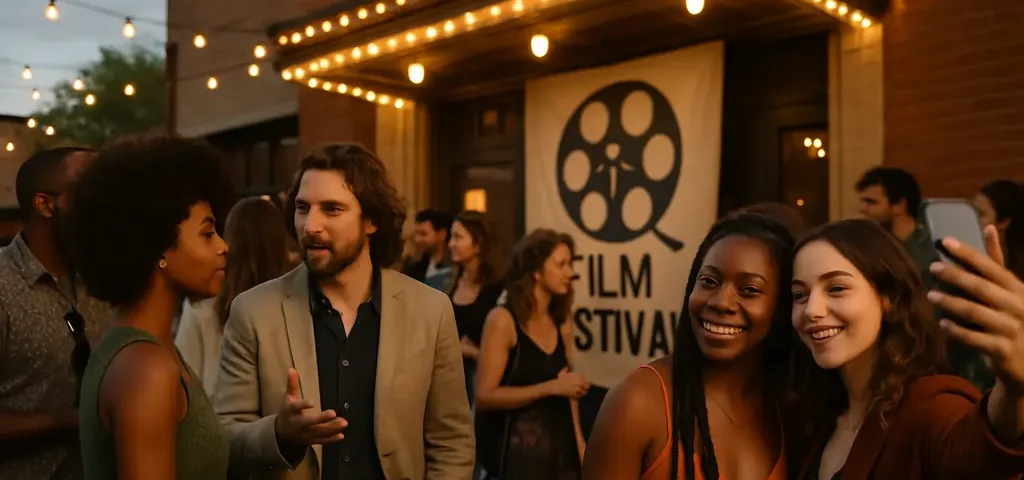
[Confirmed] AFI FEST Diversity is one of the clearest programming signals in the 2026 edition, scheduled for October 21–25, 2026, in Hollywood, according to the American Film Institute’s festival announcement. The timing matters because the event had not yet taken place as of October 7, 2026, so the strongest evidence comes from the announced lineup rather than audience response or awards outcomes. [Confirmed] The provided lineup data reports 157 films from 50 countries, with 45% of official selections directed by women and 32% directed by BIPOC filmmakers. Those figures do not settle every question about access, authorship, or power in film culture, but they give viewers a measurable basis for reading the 2026 program as more than symbolic inclusion.
AFI FEST Diversity As A Programming Signal
The Numbers Behind AFI FEST Diversity
[Confirmed] The 2026 lineup data supplied for this analysis places women directors at 45% of official selections and BIPOC directors at 32%. [Confirmed] The same research notes that the 2025 edition reported 39% women-directed official selections and 29% BIPOC-directed official selections. Read cautiously, that year-to-year comparison suggests progress in visible authorship, though it should not be stretched into a claim about equal financing, distribution, or marketing support across the industry.
[Market analysis] Festival percentages matter because major festivals work as cultural filters. They do not merely show films; they help decide which films receive reviews, sales attention, awards conversation, and later audience awareness. When a program reaches 50 countries and places women and BIPOC filmmakers in significant portions of the official slate, it changes the range of stories that can circulate through those filters. That does not mean every selected film receives equal attention. Red carpets, screening times, press access, distributor interest, and critical framing still shape which titles carry forward after the festival.
Why Selection Is Not The Same As Equity
[Opinion] AFI FEST Diversity should be read as evidence of expanded visibility, not as proof that the film industry has solved structural exclusion. A filmmaker can enter a prestigious program and still face barriers in financing a next project, securing domestic distribution, or reaching audiences outside festival spaces. The better question is not whether the 2026 lineup looks diverse on paper, but whether its programming structure gives different forms of cinema meaningful context.
[Confirmed] The 2026 program also includes films submitted for Best International Feature consideration at the 99th Academy Awards from Thailand, Japan, Palestine, Nepal, Germany, Chile, Canada, South Korea, Austria, and Singapore. [Market analysis] That matters for audiences because international feature submissions often arrive with national film policies, language politics, and distribution limits already attached. A festival slot can make those films legible to U.S. critics and programmers, even before any award outcome is known.
Discovery Track And The Politics Of First Visibility
Emerging Voices Need More Than A Label
[Confirmed] AFI’s Discovery section is presented as a space for emerging voices and boundary-pushing cinema, with titles listed on the official Discovery program. The track is culturally significant because “discovery” is not a neutral category. It can introduce viewers to filmmakers from underrepresented regions and identities, but it can also place them in a separate box from better-known auteurs. The value of the section depends on whether audiences, critics, and industry guests treat those titles as central to the festival’s artistic argument rather than as side programming.
[Confirmed] The research notes identify Elephants in the Fog from Nepal and The Friend’s House Is Here, codirected by Maryam Ataei, as examples within the Discovery grouping. [Market analysis] Those examples show how regional identity and gender can intersect in festival positioning. A Nepalese film or a film codirected by an Iranian woman may carry cultural contexts that are less familiar to some Hollywood festival audiences. The programming choice can widen the frame through which viewers encounter political memory, family structures, place, language, and formal style.
Discovery Programming And Critical Responsibility
[Opinion] The risk for any discovery section is that difference becomes a promotional shorthand. A festival can state that a program includes underrepresented voices, but critics and audiences still need to engage the films as cinema: structure, image, sound, performance, editing, and point of view. If coverage stops at identity markers, the filmmakers are reduced to proof points. If coverage ignores identity altogether, it misses the cultural conditions that shaped the work and affected its path to the screen.
[Market analysis] This is where audience engagement becomes central. Festival viewers often help determine which smaller titles gain momentum through post-screening discussion, social sharing, programmer attention, and later repertory or streaming interest. The same pattern appeared in recent conversations about NYFF audience reactions, where viewer response functioned as an early signal of changing habits around prestige and access. AFI’s Discovery slate may play a similar role if audiences treat unfamiliar regions and identities as reasons for attention rather than barriers to entry.
Audiences, Prestige, And Festival Access

Red Carpets And Special Screenings Still Shape Attention
[Confirmed] The research notes state that AFI FEST 2026 includes red carpet premieres and special screenings tied to identity, rights, migration, and inclusion, including Ava DuVernay’s 14th, scheduled to screen on October 25, 2026. [Market analysis] This placement shows that diversity is not limited to emerging filmmakers. When films about constitutional belonging, rights, or migration appear in higher-profile sections, they can reach audiences who might not seek out a Discovery title but may respond to a familiar filmmaker, subject, or event format.
[Confirmed] The research also lists established filmmakers such as Céline Sciamma, Asghar Farhadi, Werner Herzog, Hong Sang-soo, and Marie Kreutzer among the 2026 program’s recognized names. [Opinion] Their presence matters because festival diversity is often misunderstood as a tradeoff between established cinema and new representation. The 2026 materials suggest a more layered model: recognized auteurs, international submissions, documentaries, Discovery selections, and guest-curated presentations share the same festival calendar. The cultural effect depends on how those strands are framed beside each other.
How Viewers Encounter Festival Films After The Room
[Market analysis] Audience access no longer ends with a theater screening, even when the festival itself remains rooted in a physical event. Reviews, interviews, clips, distributor announcements, and later streaming windows influence how a festival title survives beyond its first showing. Coverage across film and video culture, including related industry conversations at Internet Video Magazine, reflects how festival attention now moves through screens beyond the cinema. That circulation can help smaller international or identity-centered works find viewers, but it can also flatten films into brief talking points if coverage favors speed over context.
[Opinion] For audiences, the most useful response is patient attention. A lineup with 157 films cannot be understood only through headline percentages, yet those percentages are not meaningless. They identify where programmers have placed institutional attention. Viewers can then ask which stories are being centered, which sections receive the most public framing, and whether the films selected from underrepresented communities are discussed with the same seriousness as prestige titles from familiar names.
AFI FEST Diversity And Its Cultural Implications
[Market analysis] AFI FEST Diversity has cultural weight because festivals help determine which film histories are treated as contemporary, urgent, and worthy of preservation. A 2026 lineup spanning 50 countries, with substantial reported shares of women-directed and BIPOC-directed official selections, signals a broader understanding of authorship. It places nationality, race, gender, migration, labor, rights, and identity within the festival’s public-facing idea of cinema rather than outside it.
[Opinion] The more cautious reading is also the more useful one. Representation in a lineup is a starting point, not a finished achievement. The cultural test will come through critical attention, audience conversation, distribution outcomes, and whether these filmmakers continue to receive support after October 25, 2026. Still, the announced program suggests that diversity at AFI FEST 2026 is not presented as a separate theme. It is built into the structure of World Cinema, Discovery, documentaries, special screenings, and auteur programming. That is the shift worth watching: not diversity as a sidebar, but diversity as part of how festival culture defines cinema itself.