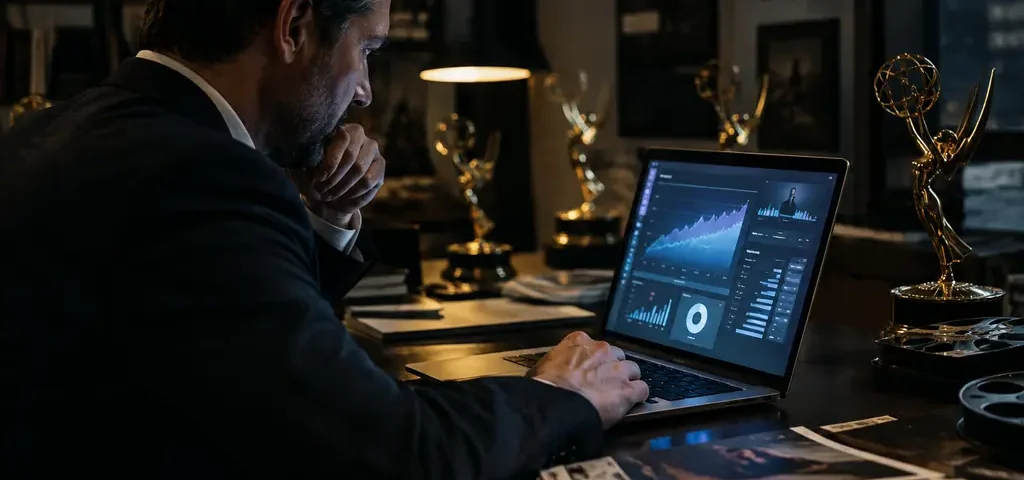
Confirmed: Emmy Awards Streaming will move from the old broadcast rotation to Prime Video under a six-year exclusive streaming deal announced by Prime Video and the Television Academy on October 6, 2026. The arrangement begins with the 2027 ceremony and gives the awards a new distribution base after decades in which ABC, CBS, Fox, and NBC rotated the telecast. Amazon said the Emmys will stream live and free of charge on Prime Video in more than 240 countries and territories, with no Prime subscription required for viewers according to Amazon. Market-analysis: the shift is not only about where one awards show appears; it changes how a legacy television institution defines reach, access, and promotional value.
What Changed In The Prime Video Deal
What Emmy Awards Streaming Changes First
Confirmed: the first clear change is the distribution gate. A ceremony long tied to U.S. broadcast television will sit inside a global streaming service beginning with the 79th Primetime Emmy Awards in September 2027. The research record states that the ceremony will keep its traditional early-September position for the first year under the deal. That timing matters because it preserves a familiar awards calendar while changing the delivery system.
Market-analysis: Emmy Awards Streaming gives the Television Academy a larger declared reach than a single domestic broadcast network could provide. That does not guarantee higher viewership, deeper attention, or stronger cultural discussion. Reach and use are different measures. A free stream across more than 240 countries and territories may remove one barrier, but audiences still have to know where the ceremony is, care enough to seek it out, and feel that the event speaks to their viewing habits.
Access Is Wider, But Not Identical To Broadcast
Confirmed: the no-subscription detail is one of the most important parts of the arrangement. If the Emmys had moved fully behind a paid subscription wall, the cultural signal would have been narrower. Free access on Prime Video positions the ceremony closer to a public event, even while it moves away from the traditional broadcast dial.
Market-analysis: the access question still changes shape. Broadcast television has long carried awards shows into homes through habit, channel familiarity, local listings, and passive discovery. Streaming asks for a different kind of audience behavior. Viewers may need to open an app, recognize Prime Video as the venue, and choose the live event among other on-demand options. That is not necessarily worse, but it is different. For industry observers, the key test will be whether the Academy and Prime Video can turn wide availability into shared attention.
Why The End Of The Wheel Deal Matters
Reported Fees And Platform Incentives
Confirmed: the move ends the long-running “wheel deal” system that rotated the Emmys among ABC, CBS, Fox, and NBC. Reported: Variety has described the earlier broadcast arrangement as carrying annual rights fees in the range of roughly US$8 million to US$10 million, while the new Amazon arrangement was reported at at least US$15 million per year as Variety reported. Those figures should be read as reported trade information, not as a full public accounting of every commercial term.
Market-analysis: the reported fee increase suggests that a live awards show can still hold financial value even as linear TV ratings face pressure. The value may now sit less in a single-night rating and more in a package of brand alignment, global distribution, advertising opportunity, data-informed promotion, and year-round marketing. A platform does not buy only a ceremony; it buys a cultural appointment that can be extended through clips, nominee features, interviews, and related programming.
A Ceremony Becomes A Rights Asset
Confirmed: Amazon’s announcement describes collaboration with the Television Academy around programming and promotional efforts beyond the ceremony itself. Market-analysis: this is where the deal points toward a wider change in awards distribution. The Emmys can be treated as a rights asset with a calendar, not a single telecast with a red carpet and trophy presentation. The ceremony remains the public peak, but nominee announcements, category explainers, archival material, and craft-focused features can keep the awards visible across a longer period.
Market-analysis: this approach may also alter how audiences understand television achievement. Broadcast-era awards shows often depended on one-night concentration. Streaming platforms can organize attention in smaller units before and after the live event. That could help viewers discover categories beyond drama, comedy, and limited series, including craft areas that rarely receive extended public discussion. It could also place awards culture closer to the recommendation systems and promotional shelves that already guide much of streaming behavior.
Audience Engagement Beyond Emmy Night
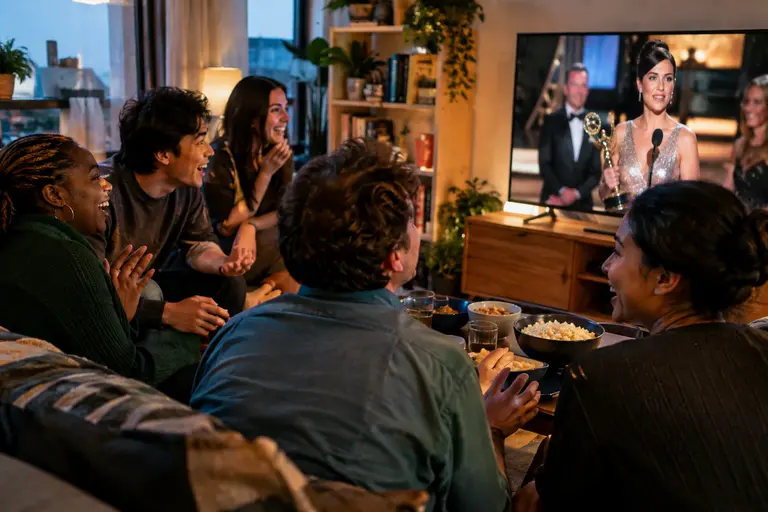
Year-Round Promotion And Cultural Memory
Confirmed: the six-year term gives Prime Video and the Television Academy time to build a recurring model rather than test a one-off stream. Market-analysis: a multi-year agreement matters because audience habits around live streaming do not form instantly. Repetition helps teach viewers where an event lives. If the Emmys appear on the same service across several cycles, the platform can develop a consistent promotional rhythm and the Academy can learn which forms of pre-event programming attract attention without reducing the ceremony to a marketing exercise.
Opinion: the most useful version of Emmy Awards Streaming would not simply reproduce a broadcast show inside an app. It would respect the ceremony’s institutional role while using the platform to explain why particular forms of television craft matter. That is especially relevant for younger and international audiences who may know nominated series through clips, social conversation, or delayed viewing rather than through weekly appointment television.
Market-analysis: Biff Award’s recent coverage of streaming consolidation and film access raised a related issue: fewer, larger platforms can make discovery simpler in some cases while concentrating cultural gatekeeping in others. The Emmy arrangement sits inside that tension. It may widen global entry to the ceremony, yet it also gives a major technology and entertainment company a stronger position in how awards attention is organized.
What Emerging Filmmakers Can Read From The Deal
Market-analysis: for emerging filmmakers and television creators, the deal is a signal about where professional validation is being displayed. Awards recognition still depends on creative work, peer evaluation, campaigning, and institutional rules. Distribution does not replace those factors. Yet the public presentation of that recognition now moves through platforms that also commission, acquire, market, and recommend screen work.
Opinion: this should encourage newer creators to study distribution as part of artistic life rather than as an afterthought. The path from festival, pilot, short, or independent feature to audience awareness is shaped by platforms, rights windows, and promotional timing. A related industry site, Internet Video Magazine, tracks online video culture from a distribution angle, which is increasingly relevant as live events and long-form screen work share the same services.
Reviewed: the available research does not include verified audience survey data about how viewers reacted to the announcement. It also does not provide detailed advertising terms, production changes, or platform interface plans for September 2027. Any claim that the move will automatically increase viewership, improve younger-audience engagement, or weaken broadcast television further would go beyond the supported record. The safer reading is that the deal creates conditions for a new model; it does not prove the model’s outcome.
Emmy Awards Streaming And Future Distribution Models
A Cautious Model, Not A Universal Template
Market-analysis: Emmy Awards Streaming may become a reference point for other awards organizations, but it should not be treated as a simple template. The Emmys have brand recognition, an annual calendar, a large professional base, and global interest in U.S. television. Smaller awards bodies may not receive the same platform support or financial terms. A streaming move can expand access in theory while still leaving discoverability, production cost, and audience habit unresolved.
Confirmed: the research record also notes a wider awards-show shift, including earlier moves by other major ceremonies toward streaming distribution. Market-analysis: the Emmys’ deal strengthens that direction because it places a legacy television award inside a service associated with both scripted programming and live events. It reduces the old distinction between a network that airs culture and a platform that stores content. Prime Video, in this case, becomes a live event holder as well as a library and commissioning service.
The Distribution Lesson
Opinion: the central cultural question is whether the Emmys can remain a shared television ritual after leaving the broadcast rotation. Shared rituals depend on more than technical access. They require common timing, public conversation, press attention, social exchange, and enough perceived significance for viewers to gather around the same event. A free global stream helps with availability, but the Academy and Prime Video still have to create a reason for audiences to treat the ceremony as more than another tile on a service menu.
Market-analysis: the deal’s importance lies in that test. If the September 2027 ceremony finds a strong audience across domestic and international viewing, awards groups may see streaming not as a fallback from declining broadcast reach but as a primary home for live cultural events. If attention fragments, the industry may learn that distribution scale alone cannot sustain awards relevance. Either result will give studios, platforms, creators, and awards bodies useful evidence about how prestige television culture travels after the broadcast wheel.