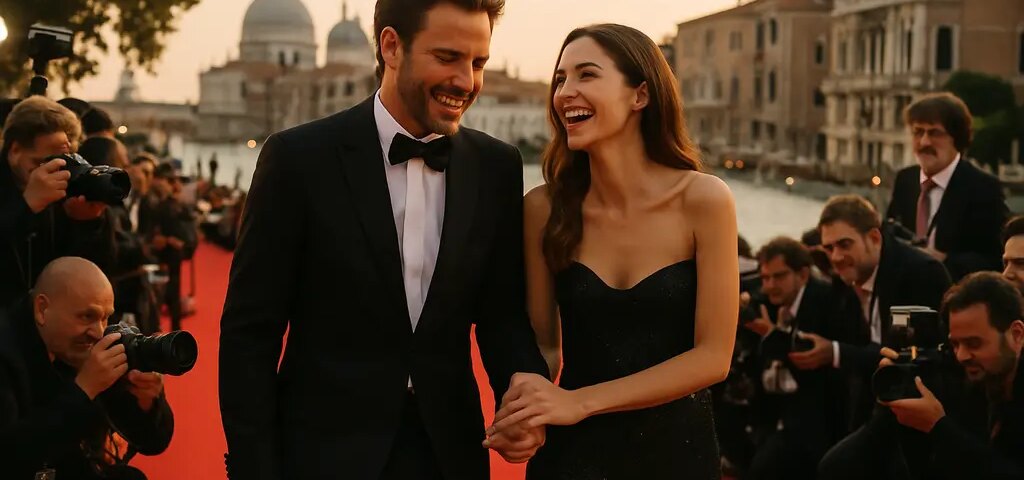
Confirmed: The Venice Film Festival 2026, formally the 83rd Venice International Film Festival, ran from September 2 to September 12, 2026, at Lido di Venezia. As of September 14, 2026, the event had ended, so the films, ceremonies, and awards are best read in retrospect rather than as previews. Market Analysis: The 2026 edition presented a familiar Venice pattern: a high-profile opening slot, a closing film placed after the awards ceremony, and a prize list that connected European art cinema, South Korean authorship, established performers, debut filmmaking, restoration culture, and immersive work.
Key Dates And Competition Frame
Venice Film Festival 2026 Opening Night
Confirmed: Ink, directed by Danny Boyle and written by James Graham, opened the festival on Wednesday, September 2, 2026, with a world premiere in competition in Sala Grande at the Palazzo del Cinema. The cast named in the research record included Jack O’Connell, Guy Pearce, and Claire Foy. Market Analysis: An opening film in competition carries a different public function from an out-of-competition gala. It introduces the festival’s artistic contest while also setting an early tone for press, industry guests, and cinephile audiences.
Opinion: Boyle’s placement as opening director likely gave the first night a recognizable auteur profile without reducing the program to one title. Venice often gains attention from the launch film, yet the durable cultural record comes from the full spread of awards, side sections, and discoveries that follow over the next ten days.
The Closing Slot After The Awards
Confirmed: The closing film was Dio ride by Giovanni Veronesi, presented as a world premiere after the awards ceremony on Saturday, September 12, 2026. Market Analysis: Placing a closing film after the prize ceremony can soften the transition from competition to public memory. Instead of ending only with trophies, the festival ended with another feature presentation, which kept attention on cinema as a shared viewing act rather than only on ranked results.
Venice Film Festival 2026 Awards Pattern
What Venice Film Festival 2026 Rewarded
Confirmed: The Golden Lion for Best Film went to Kvinde Ukendt, also known as Woman Unknown, by May el-Toukhy. The film was identified in the research record as a co-production among Denmark, Sweden, and Latvia. Confirmed: The same film also received the Coppa Volpi for Best Actress for Mathilde Arcel. Market Analysis: That pairing gave the top winner both institutional recognition and a performance-centered point of discussion, which can help audiences approach an awarded film through craft as well as through the headline prize.
Confirmed: The Silver Lion – Grand Jury Prize went to Possible Love, also titled Ga-neung-han Sa-Rang, by South Korean director Lee Chang-dong. Confirmed: The Silver Lion for Best Director went to Ilya Khrzhanovsky for DAU, identified in the research record as a Germany, France, and Sweden production. Opinion: These results suggest that the main jury did not concentrate all major recognition in one national cinema or one mode of authorship.
- Confirmed: Golden Lion for Best Film: Kvinde Ukendt / Woman Unknown by May el-Toukhy.
- Confirmed: Silver Lion – Grand Jury Prize: Possible Love / Ga-neung-han Sa-Rang by Lee Chang-dong.
- Confirmed: Silver Lion for Best Director: Ilya Khrzhanovsky for DAU.
- Confirmed: Coppa Volpi for Best Actress: Mathilde Arcel in Kvinde Ukendt.
- Confirmed: Coppa Volpi for Best Actor: John Malkovich for Wild Horse Nine, directed by Martin McDonagh.
Acting And Writing Prizes
Confirmed: John Malkovich won the Coppa Volpi for Best Actor for Wild Horse Nine, directed by Martin McDonagh. Confirmed: Best Screenplay went to Un Bon Petit Soldat by Stéphane Brizé, Coralie Amédéo, and Olivier Gorce, while the Special Jury Prize went to Naza by Yuval Abraham and Rachel Szor, according to the published Venice 2026 palmarès. Confirmed: The Marcello Mastroianni Award for best young actor or actress went to Malou Khebizi in 15/18 (A Place to Heal) by Cédric Kahn.
Market Analysis: The spread between acting, writing, and jury recognition matters for audience engagement. A viewer who may not follow festival hierarchies closely can still find entry points through a performance prize, a screenplay award, or a young performer citation. The Venice Film Festival 2026 therefore created several routes into its prize list rather than only one headline pathway.
Debuts, Restorations, And Immersive Work
First Features And Film Memory
Confirmed: La Maison du Vent, also known as House of the Wind, by Auguste Bernard Kouemo Yanghu won the Lion of the Future – Luigi De Laurentiis Award for a debut film. Market Analysis: The debut prize is one of the festival’s more practical forms of recognition because it identifies a filmmaker at an early public stage. For emerging directors, this kind of award can become a curatorial signal for programmers, critics, and international audiences, though the research record supplied here does not support any claim about later distribution deals or box-office effects.
Confirmed: Venice Classics awarded Best Restored Film to Long Night of 1943, also titled La lunga notte del ’43, by Florestano Vancini. Opinion: Restoration prizes serve a different cultural purpose from premiere awards. They ask audiences to treat film history as active public culture, not as a closed archive. That distinction is especially relevant at a major festival because restoration programs place older works beside new premieres, encouraging comparison across periods and production contexts.
Immersive Prizes As Cultural Signals
Confirmed: In the Venice Immersive section, the Grand Prize went to The Pigeon Ring by Shixin Tao and Yuqi Zhang. Confirmed: The Special Jury Prize went to Out of the Ashes by Rory Mitchell and Nonny De La Peña, and the Achievement Prize went to Empire at Sea by Peter Flaherty. Market Analysis: Including immersive awards within the festival record indicates that Venice continued to treat screen culture as broader than conventional feature exhibition, while the available research does not give enough detail to assess audience reception or technical form for these specific works.
Market Analysis: This is where festival coverage must be cautious. Without supported attendance data, buyer reports, reviews, or audience surveys in the research notes, no firm claim can be made about which immersive title most affected viewers. What can be said is narrower and safer: the section placed works from China and the United States within the official awards record, giving them institutional visibility alongside feature-film prizes.
What The 2026 Results Mean For Film Culture

Audience Engagement Without Unsupported Claims
Reviewed Analysis: The prize list offered several audience-facing storylines: a Danish-Swedish-Latvian co-production taking the Golden Lion, a South Korean director receiving the Grand Jury Prize, an acting award for a widely known performer, and a debut filmmaker recognized through the Lion of the Future. Market Analysis: These are not proof of public demand, but they are usable signals for curators, critics, and festival programmers who track how major festivals frame new work.
Market Analysis: Venice also sits within a wider circuit of regional and international film recognition. For readers comparing how different events shape late-year attention, Biff Award’s related coverage of regional festival awards offers a useful point of comparison. Confirmed Network Context: For adjacent audience coverage across screen culture, the same network includes True Real TV, offering further insights into how screen culture is experienced across platforms. Opinion: The value of that comparison is not in predicting winners elsewhere, but in seeing how different festivals create distinct forms of public attention.
Confirmed: Lifetime achievement Golden Lions were awarded to George Clooney and Ellen Burstyn. Market Analysis: Lifetime honors function differently from competitive prizes because they connect a festival’s current edition to longer careers. In coverage terms, they can draw broad recognition, but they should not displace attention from the films and filmmakers selected for the competitive awards.
Venice Film Festival 2026 Awards And Audience Signals
A Cautious Reading Of The Event
Opinion: The Venice Film Festival 2026 results are most useful when read as a curated record rather than a prediction machine. Confirmed: The event opened with Danny Boyle’s Ink, closed with Giovanni Veronesi’s Dio ride, and awarded the Golden Lion to May el-Toukhy’s Kvinde Ukendt. Market Analysis: Between those points, the awards highlighted acting, screenplay, first features, restoration, and immersive work, which gave the edition more than one cultural center.
Reviewed Analysis: The strongest supported reading is that the 83rd edition balanced prestige cinema, international co-production, established careers, and early-career recognition. Opinion: For audiences, that balance matters because it gives different viewers different reasons to enter the program: a top-prize winner, a performer, a debut, a restored classic, or an immersive project. The Venice Film Festival 2026 left behind a prize map that rewards careful reading more than instant ranking.