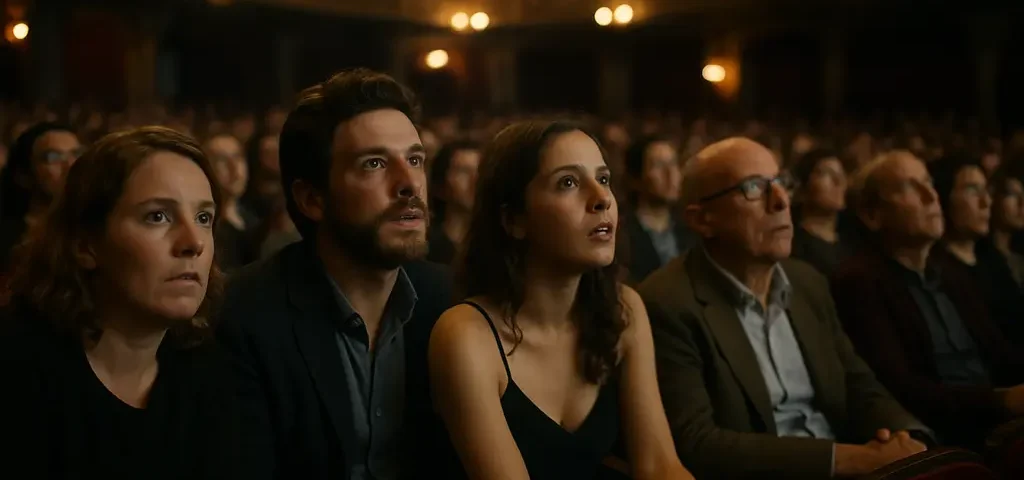
Confirmed: Venice Audience Reactions after the 83rd Venice Film Festival, which ran from September 2 to September 12, 2026, gave the film sector more than a set of winner names to interpret. They showed how applause, public attendance, social sharing, jury debate, and ethical scrutiny now sit beside prizes as evidence of cultural momentum. The Golden Lion went to Woman Unknown, while NAZA received the Special Jury Prize, according to The Guardian’s Venice report. That awards record mattered, but the public response around the festival suggested that recognition is becoming a wider conversation between juries, critics, distributors, and audiences.
Why Venice Audience Reactions Mattered In 2026
Venice Audience Reactions As Cultural Evidence
Market analysis: A major festival prize has never been only a trophy. It can affect release strategies, publicity language, distributor interest, and the way audiences first hear about a film. What changed in the 2026 Venice cycle was the intensity with which audience behavior became part of the awards story. Ovation length, public ticket demand, online interaction, and post-awards disagreement all helped shape the meaning of the festival after the jury announcements.
Confirmed: The research record for the festival reported 117,656 public tickets sold during the September 2–12 run, a 14% increase over the previous 2025 record. It also reported 37.3 million views across content published on Facebook, X, Instagram, TikTok, and YouTube, with 739,341 interactions. Those figures do not prove that every viewer agreed with the jury, or that social attention converted into later cinema admissions. They do show that Venice’s public reach extended well beyond the physical screenings on the Lido.
Opinion: Reading Venice Audience Reactions as a form of cultural evidence requires caution. Applause can be sincere, social, strategic, or shaped by the setting of a premiere. Social interaction can include admiration, criticism, curiosity, or dispute. Still, the combined signals are useful because they show which films entered public conversation quickly and which wins required explanation after the ceremony.
Major Wins, Ovations, And Jury Signals
Applause Did Not Always Predict The Prize Map
Confirmed: The 2026 festival produced several high-profile audience moments before the awards were known. Variety reported that Wild Horse Nine prompted a 13-minute standing ovation, while Bunker, starring Penélope Cruz and Javier Bardem, drew a 15.5-minute ovation, one of the longest audience responses of the festival Variety’s Venice takeaways. The research notes also recorded a 25-minute standing ovation for NAZA, described there as the longest on record at Venice for a film entered late into competition.
Market analysis: These reactions matter because they create early stories that awards campaigns can use, but they are not the same as jury consensus. A long ovation can tell distributors that a film has emotional force in a premiere room. It can tell critics that a title has become an event. It can also create pressure on later readers of the awards list, who may ask why the loudest public reaction did or did not align with the top prize.
Confirmed: The Golden Lion and the Volpi Cup for Best Actress both being tied to Woman Unknown puzzled some critics, according to the research and Guardian coverage. That response does not invalidate the jury’s decision. Venice juries are selected to make judgments, not to mirror public applause. Yet the reaction showed a recurring tension in festival culture: prizes are authoritative, while audience response can be emotionally persuasive.
Reviewed: For readers seeking the confirmed award record rather than only reaction signals, Biff Award’s related recap of the Venice 2026 awards places the main prizes in sequence. That distinction helps keep the analysis clear. The award list tells us what was officially recognized; the audience record helps explain how that recognition was received.
Audience Scale Beyond The Screening Room
Public Reach Changed The Life Of Festival Moments
Market analysis: Festival audience response used to move outward through trade reviews, word of mouth, newspaper coverage, and later release campaigns. In 2026, the research record suggests a faster public cycle. A standing ovation could become a headline. A jury decision could become a debate. A documentary’s subject could move from screening room discussion into broader political and cultural argument within hours.
Confirmed: The festival’s reported public ticket growth and large social footprint placed Venice in a strong position as both a film event and a media event. That does not mean social attention should be treated as quality measurement. A short clip, a red-carpet moment, or a contested decision can travel widely without reflecting careful engagement with a film. Still, the audience scale helped turn major wins into public signals that distributors and awards strategists were likely to study after September 12, 2026.
Opinion: This shift gives recognition a double function. A prize still honors artistic judgment within the festival. At the same time, the public reaction around that prize shapes the film’s first public identity. If a film wins and audiences appear divided, the campaign may need to explain the jury’s choice through craft, theme, or critical backing. If a film loses but receives extraordinary applause, that reaction can become part of its later positioning.
Market analysis: Culture sites connected to the same reading public, including Noir Whale, often track how awards coverage travels across film, media, and audience communities. This wider circulation is significant as the meaning of a win now forms through many layers: official recognition, trade interpretation, social conversation, and viewer expectation.
Ethics, Representation, And The Limits Of Applause

Recognition Faced Stronger Public Tests
Confirmed: The research notes recorded that 19 of the 21 main competition films were directed by men, even as May el-Toukhy won the Golden Lion for Woman Unknown. That contrast shaped part of the post-festival discussion. A woman director winning the top award carried symbolic weight, but the competition makeup still pointed to a narrow selection pattern at the highest level of the festival.
Opinion: Audience reaction to representation is rarely simple. Some viewers focus on the winner, seeing the Golden Lion as meaningful recognition. Others look at the full lineup and ask whether the selection process offered enough space to women filmmakers before the awards stage was reached. Both responses can exist at the same time. The first values a major outcome; the second measures the path that produced it.
Confirmed: The research also recorded debate around DAU, directed by Ilya Khrzhanovsky, after it won the Silver Lion for Best Director. The dispute centered on whether the film’s production methods or representational choices could be separated from the finished screen work. The available research does not support claims beyond that debate, so the point should be framed carefully: the film became part of a wider argument about ethics and festival recognition.
Market analysis: That argument is likely to matter for future festivals because viewers are treating production context as part of reception. This does not mean every controversy will define a film, nor that audience criticism should replace formal evaluation. It does suggest that awards bodies, press teams, and distributors may face more questions about how films were made, who was included, and whether artistic risk was handled with care.
What Venice Audience Reactions Mean For Future Trends
Future Awards Momentum Will Need More Than A Trophy
Market analysis: Venice Audience Reactions from 2026 point toward a festival culture where major wins remain powerful but no longer speak alone. The Golden Lion can give a film prestige. A Special Jury Prize can give a documentary extra visibility. A Volpi Cup can help define a performance. Yet those forms of recognition now meet immediate public interpretation through applause records, online circulation, lineup debate, and questions about ethics.
Opinion: The most useful lesson is not that audiences have replaced juries. They have not. Jury awards still carry formal authority, and Venice remains a major point of reference for international cinema. The lesson is that recognition has become more interactive. A prize starts a new phase of discussion rather than ending the conversation about a film’s value.
Market analysis: For distributors, the practical question after September 12, 2026, was not only which films won. It was which films had a clear public story after the awards. Woman Unknown had top-prize authority and an acting win. NAZA had documentary urgency and strong recorded response. Wild Horse Nine and Bunker had long ovations that could support later audience messaging. DAU had recognition paired with ethical debate, which may require careful framing rather than simple celebration.
Opinion: Venice Audience Reactions show why awards analysis should be audience-aware without becoming applause-driven. The future trend is likely a mixed model: juries confer prestige, critics test claims of quality, audiences create emotional and social momentum, and public debate checks whether recognition feels culturally convincing. That mix is less tidy than a winner list, but it gives a fuller picture of how film awards work after the ceremony ends.