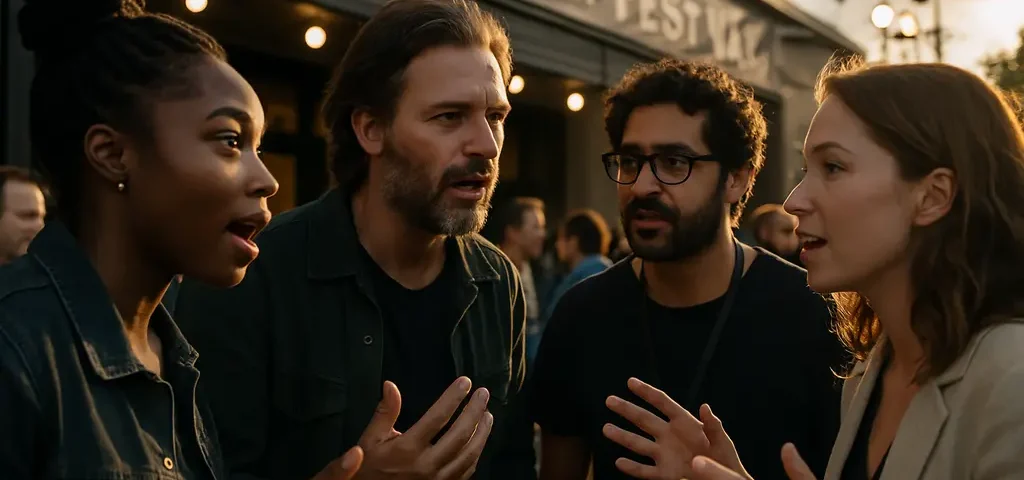
[confirmed] The Indiewood Film Festival made its first appearance under that name in Hollywood from September 10 to 18, 2026, at TCL Chinese 6 Theatres, after previously being known as the Silicon Beach Film Festival. The official festival materials placed the event in a highly recognizable exhibition setting and presented a wide program across features, shorts, screenplays, music videos, experimental work, student films, and TV/Web pilots through the official festival site. [market-analysis] That combination matters because independent film recognition is no longer shaped only by a premiere slot or a single jury prize. Festivals increasingly function as public-facing credibility systems, where format, craft, audience response, and venue visibility all affect how a project is received after screening.
Why The Indiewood Film Festival Rebrand Matters
Indiewood Film Festival As A Hollywood Signal
[confirmed] Festival materials identify Jon Gursha as Festival Director and Peter Greene as Programmer, while the move from Silicon Beach Film Festival to Indiewood was presented as a repositioning around independent film recognition in Hollywood through the festival’s published festival flipbook. [market-analysis] A name change is not automatically proof of a new cultural role, but it can clarify how an event wants filmmakers, press, and audiences to understand its purpose. “Silicon Beach” suggested a regional and technology-adjacent identity. “Indiewood” points more directly toward the relationship between independent work and Hollywood exhibition culture.
[opinion] The value of that shift is partly symbolic. Independent filmmakers often seek recognition that feels credible without being absorbed into studio logic. Holding the event at TCL Chinese 6 Theatres gave the 2026 edition a setting associated with mainstream filmgoing, but the programming structure stayed oriented toward independent formats and emerging voices. That tension is useful: it places non-studio work inside a venue that general audiences already understand as part of cinema culture.
Public Access And Venue Status
[confirmed] The festival’s ticketing information described public access with tickets available online or at the door. [market-analysis] That detail matters because audience engagement can weaken when festival events function only as industry rooms. Public access gives smaller films a chance to meet viewers beyond invited guests, filmmakers’ peers, or private networking circles. It also gives audience awards more meaning, because the response is attached to exhibition rather than private appraisal alone.
[market-analysis] The Hollywood venue also creates a clearer promotional identity for filmmakers. A screening in a known cinema does not guarantee distribution, reviews, sales, or future festival bookings. Still, it can provide a stronger point of reference in press kits and filmmaker communication than a purely online placement or a low-visibility screening. For short films, student work, and experimental pieces, that kind of context can help audiences understand the work as part of a larger film culture rather than an isolated upload.
How Awards Categories Reframe Value
Craft Recognition Beyond The Top Prize
[confirmed] The 2026 awards list spanned more than 60 categories, including major divisions such as Best Feature Film, Best Documentary Feature, genre sections, screenplay categories, performance prizes, and craft awards for areas such as editing, production design, cinematography, and sound. [market-analysis] This wide awards structure changes what recognition can mean. A festival with only a few top prizes tends to reward finished works as unified objects. A wider structure can identify the specific labor inside those works, making room for editors, cinematographers, sound teams, actors, and production designers to receive public credit.
[opinion] That is especially relevant for independent film, where many contributors work with limited resources and fewer publicity channels. A cinematography or editing award may not carry the same public weight as a top feature prize, but it can become a concise signal of craft achievement. For collaborators building careers across shorts, features, music videos, and pilots, that signal can be useful when communicating with programmers, producers, and new creative partners.
Indiewood Film Festival And Audience Awards
[confirmed] The awards structure included Audience Awards in multiple sections, including areas such as feature, documentary, short animation, and web series. [market-analysis] Audience recognition has become a key counterweight to jury-only festival culture. A jury prize can affirm artistic judgment from a selected panel; an audience award shows that a work connected inside a room. Those are different kinds of evidence, and independent filmmakers often need both.
[market-analysis] The Indiewood Film Festival did not use audience response as a decorative add-on in the available 2026 awards record. By naming audience categories across formats, it treated viewer response as part of recognition. That does not make audience voting a perfect measure of quality. Audience awards can reflect screening time, filmmaker turnout, genre accessibility, or local enthusiasm. Still, they capture an important fact that juries alone cannot measure: whether a film found active viewers during the event.
[market-analysis] This connects with wider regional and independent awards patterns. As noted in Biff Award’s coverage of regional film recognition, smaller and mid-sized festivals can build trust by showing how films meet communities, not just selection committees. The Indiewood model appears to fit that shift, with public access and audience awards working beside juried categories.
What The 2026 Program Suggests About Indie Recognition

Format Diversity As Market Analysis
[confirmed] The 2026 program and awards materials covered features, shorts, screenplays, music videos, experimental works, student films, TV/Web pilots, vertical video, micro-narratives, horror, fantasy, action, western comedy, and other genre or form-specific areas. [market-analysis] That range reflects a practical change in how independent creators build visibility. Many filmmakers no longer move in a straight line from short film to feature debut. Some work across web pilots, vertical formats, branded-adjacent short work, screenplays, music video, and experimental pieces before a conventional feature arrives.
[opinion] A festival that recognizes these forms is acknowledging how independent production actually works for many creators. The risk is category sprawl: too many prizes can make an awards list harder for audiences to parse. The benefit is access: more forms of work can be evaluated on their own terms rather than forced into a narrow feature-or-short divide. For a new edition under a new name, the 2026 structure leaned toward inclusion across formats rather than scarcity of recognition.
[market-analysis] That approach also fits a broader media environment in which online video, web series, and short-form storytelling influence audience habits. Related coverage of creator and video culture at Internet Video Magazine highlights why festivals now face pressure to treat non-theatrical formats as part of the same creative conversation, even when theatrical exhibition remains a powerful marker of prestige.
Student And International Signals
[confirmed] The awards included a dedicated Best Student Short category. [market-analysis] Student recognition is not just a youth pipeline gesture. It gives early-career filmmakers a formal marker at a stage when they may have few public credits. In independent film, that can matter for future submissions, grant applications, school showcases, and collaborations. It also tells audiences that the festival’s field of view includes artists still in training, not only filmmakers with completed professional features.
[confirmed] The 2026 awards also included international recognition, with Best International Animated Short Film awarded to Grizzly Jim and Best International Feature Film awarded to Pretty. [market-analysis] These categories suggest that the festival’s identity was not limited to Los Angeles-area production, even though its venue and rebrand leaned into Hollywood. International prizes can help a festival avoid becoming only a local showcase, while still using location as part of its public identity.
[opinion] The balance between local access and international reach is one of the more interesting signs from the 2026 edition. A Hollywood address can attract attention, but a festival gains cultural value when its program makes room for films that do not simply mirror the city’s dominant industry pathways. Based on the available materials, the event used category design to widen the field rather than define independent film through one production model.
What The Indiewood Film Festival Changed
A Cautious Reading Of Its First Edition
[market-analysis] The 2026 edition should be read carefully. One edition under a new name cannot prove a lasting shift in independent film recognition. It can, however, show what a festival is trying to reward. In this case, the structure pointed toward broad participation: public screenings, audience awards, student categories, international prizes, genre sections, non-traditional formats, screenplays, and craft recognition.
[opinion] The strongest part of the model is not any single award. It is the way the categories distribute attention across the filmmaking process. Features and documentaries still sit near the center, but they are not alone. Shorts, pilots, experimental work, music videos, vertical formats, student films, performances, scripts, and technical crafts all appear inside the recognition system. That structure may help filmmakers describe achievement with greater precision after the festival has ended.
[market-analysis] The central question after September 18, 2026, is whether the event’s next editions can keep that breadth legible for audiences. Recognition has to be inclusive, but it also has to be understandable. If viewers, filmmakers, and programmers can clearly see what each category represents, the model can strengthen trust. If the awards become too diffuse, the signal may weaken. For now, the Indiewood Film Festival offered a clear case study in how an independent festival can use venue, public access, audience response, and category design to expand what counts as festival achievement.