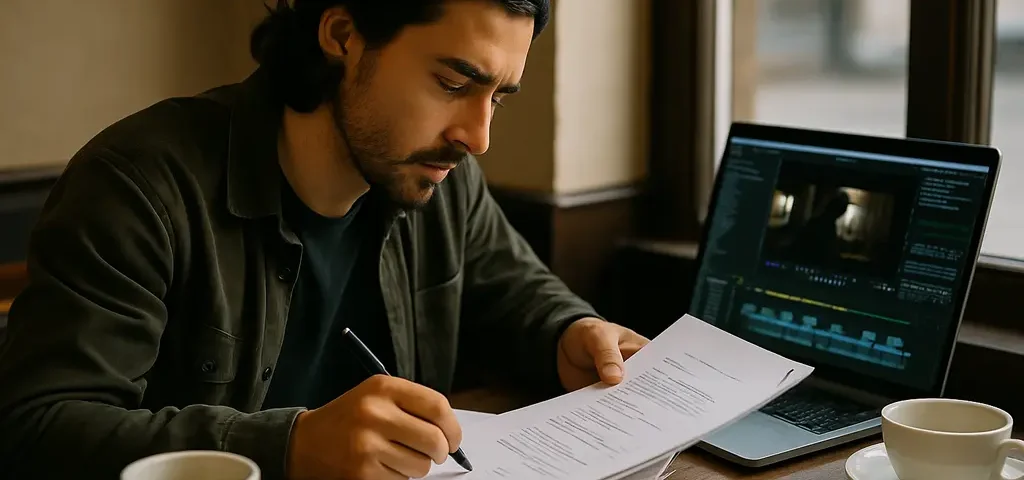
Confirmed: The 2026 Independent Shorts Awards cycle ended with its 8th Annual Awards Ceremony on September 19, 2026, at Regal LA LIVE in Los Angeles. That timing matters for any Indie Filmmaker Spotlight because the question is no longer who might win, but how the winners can turn a short-film honor into audience trust, industry meetings, and longer-form work. The official 2026 award winners list identified a wide field: 3,409 submissions from 73 countries, with 39 awards given across 27 films representing 13 countries. In that group, Jessica J. Rowlands’ Rise and Stacey Maltin’s Malka stood out as useful case studies in how short-film recognition can shape a filmmaker’s next public chapter.
Why The Indie Filmmaker Spotlight Shifted After September 19
Independent Shorts As A Filter For Audience Attention
Market analysis: Short-film awards do not guarantee a feature career, a distribution deal, or a lasting audience. They do, however, create a public record that programmers, producers, journalists, and collaborators can read quickly. In a crowded field, that record is especially useful when it shows repeated signals rather than a single isolated laurel. Independent Shorts Awards reported thousands of submissions for the 2026 cycle, so the winning films emerged from a broad international pool. That scale does not make every prize equal in market value, but it gives the ceremony enough context to matter for early-stage career storytelling.
Confirmed: Rise, from Zimbabwe, won five awards at the 2026 Annual Awards: Best Indie Short of the Year, Best First Time Female Director, Best Supporting Actor, Best Young Actor, and Best Cinematography. Malka, directed by Stacey Maltin and starring Tovah Feldshuh, won Best Drama Short, Best Female Director, and Best Original Score. Those outcomes placed both films beyond general selection status and into craft-specific recognition. For audiences, that distinction can help frame what to notice: not only the story premise, but performance, image-making, musical tone, and directorial control.
Indie Filmmaker Spotlight: Rowlands And Maltin As Case Studies
Opinion: The Indie Filmmaker Spotlight here is strongest when it treats awards as evidence, not prophecy. Rowlands and Maltin are not interchangeable examples. Rowlands’ record points toward a first-feature leap after a debut short that received multiple honors. Maltin’s case shows how an established short can sit beside prior feature experience and a continuing production path. Together, they show two different uses of festival recognition: one filmmaker building a bridge from debut short to feature entry, and another using a short drama to extend a body of work across directing, acting collaboration, and genre development.
Market analysis: This pattern connects with a larger discussion of how regional and specialist awards help independent filmmakers translate attention into credibility. Biff Award’s prior analysis of regional film recognition made a related point: awards can assist visibility, but the next steps depend on audience records, local ties, and disciplined pitching. The same caution applies here. A prize can open a door, but the filmmaker still needs a project that can survive financing questions, casting needs, production schedules, and festival or buyer expectations.
Rise And The Weight Of First-Feature Momentum
Jessica J. Rowlands Built A Wider Profile Around Rise
Confirmed: Rowlands’ Rise was identified in the research record as her directorial debut, and its five wins at the 2026 Independent Shorts Awards gave the film the largest awards footprint among the examples provided. The cultural significance is not limited to quantity. A debut short winning Best Indie Short of the Year and Best First Time Female Director creates a clear story for the filmmaker’s public profile: the work was not only noticed, but recognized across both film-level and director-level categories.
Confirmed: An August 2026 Rowlands profile reported that she was attached to direct her debut feature, Trouble, which she also wrote. The film was described as being about surfer Lisa Andersen and as produced by Andrew Lazar. The same profile said Rowlands was writing two other features and co-writing a project with an Academy Award-winning director. Those details suggest that the award attention around Rise did not sit apart from a working slate; it arrived while Rowlands was already being positioned for longer-form directing and writing.
Market analysis: The important point is not that a short automatically becomes a feature opportunity. The safer reading is that Rise supplied Rowlands with a proof point at the right moment. For a filmmaker moving toward a debut feature, a decorated short can communicate control of tone, actors, visual rhythm, and production pressure. The cinematography award is especially relevant because it points to screen grammar, not just theme. If Trouble moved forward from the stage described in the August profile, the Rise record would likely function as part of the professional argument for why Rowlands could lead a larger production.
Opinion: Rowlands’ cultural position is also shaped by the Zimbabwe connection in the research notes. Those notes state that Rise carried milestone visibility for Zimbabwean cinema and that Rowlands established an arts initiative in Zimbabwe to support emerging filmmakers in Southern Africa. Because those claims are not linked here to one of the approved source URLs, they should be read cautiously within this article. Still, they help explain why the film’s reception may matter beyond individual career gain: audiences often respond differently when an award run appears tied to regional access, training, and material support rather than private advancement alone.
Malka And The Value Of A Drama Short Signal
Stacey Maltin’s Awards Point To Craft Continuity
Confirmed: Maltin’s Malka won Best Drama Short, Best Female Director, and Best Original Score at the 2026 Independent Shorts Awards. The film starred Tovah Feldshuh, according to the research notes. The combination of drama, directing, and score prizes creates a different profile from Rise. It suggests a film being recognized for emotional structure and tonal design, not only for director emergence. For a drama short, that matters because audience engagement often depends on compression: a short has limited time to establish stakes, performance texture, and a musical or sonic identity that feels earned.
Confirmed: The research notes identify Maltin’s feature debut as Triple Threat, which premiered at the Oscar-qualifying Cinequest Film Festival and was released by Gravitas Ventures in 2023. They also state that Maltin was in production in New York on a feature titled C-Side, reuniting with Feldshuh after Malka. Her development slate was listed as including Blue Moon Fire, described as psychosexual fairy-tale horror; Something Jewish, described as a holiday romantic comedy; and HEAD, described in the research notes as a sex comedy. Since these details come from the provided research and are not linked here to an approved source, they should be treated as public-project context rather than independently expanded claims.
Market analysis: Maltin’s path shows a useful alternative to the “breakout debut” narrative. She had already directed a feature before Malka earned its 2026 short-film prizes. In that sense, the awards did not introduce her from zero; they strengthened an existing profile and gave a recent collaboration with Feldshuh a clearer public marker. That can matter for audience development because a short can keep a filmmaker visible between feature releases, especially when it shows command of a tone or partnership that may continue into later work.
Opinion: For audience engagement, the Indie Filmmaker Spotlight should avoid treating Maltin’s slate as a promise of what viewers will receive. Development titles can change, stall, or reappear in altered form. What can be said with more confidence is that Malka added a recent awards record to Maltin’s directing identity and kept her associated with performance-led drama at a moment when the research notes also placed her in feature production.
How Awards Shape Culture And Audience Memory

Recognition Works Best When It Clarifies A Filmmaker’s Public Argument
Market analysis: Awards are cultural sorting tools. They do not decide artistic value on their own, but they help audiences and industry readers decide where to place attention. In the case of Rise, the public argument is built around a debut short with multiple forms of recognition and a director moving toward a first feature. In the case of Malka, the public argument is built around a director with prior feature experience, a decorated drama short, and a stated set of projects across different tones. These are not identical paths, and that difference is the point.
Opinion: The strongest use of an awards article is to help readers ask better questions. What did the award body recognize: story, direction, acting, image, music, or all of those? Does the filmmaker have a next project with named creative partners? Is the audience being asked to follow a completed film, a person’s career, or a wider cultural mission? Coverage of screen culture across fiction, nonfiction, and reality-adjacent formats at TrueRealTV often turns on the same issue: viewers do not engage only with content, but with the public meanings that gather around creators, communities, and formats.
Market analysis: The 2026 Independent Shorts Awards also show how international short-film prizes can produce different forms of value. For some filmmakers, the benefit is proof of craft. For others, it is access to press language, programmer awareness, or investor-facing credibility. For audiences, the benefit can be discovery: a short drama from Zimbabwe or a compact character-driven film with a known stage and screen actor may reach viewers who would not otherwise seek it out. None of that should be overstated. Awards help organize attention; they do not replace the work of distribution, community screenings, interviews, and future releases.
Indie Filmmaker Spotlight After Independent Shorts
Opinion: This Indie Filmmaker Spotlight is less about predicting who will “break out” and more about reading the public record left after September 19, 2026. Rowlands’ Rise left the ceremony with the clearest awards sweep among the two featured films and a feature path described in an August profile. Maltin’s Malka left with drama, directing, and score recognition that supports an already active directing profile. Both cases show why short-film prizes still matter in a crowded media economy: they give audiences a reason to pay attention before the next feature arrives, and they give filmmakers a documented point from which to make their next case.
Confirmed: No rumor-based claim is needed to understand the significance of these winners. The supported record is enough: the 2026 ceremony has already happened, the awards have been announced, and the next paths described in the research vary by filmmaker. That is where responsible cultural analysis should stay. The value lies not in hype, but in seeing how a short-film honor can become part of a longer conversation about authorship, audience trust, regional identity, and the work required after a festival stage goes dark.