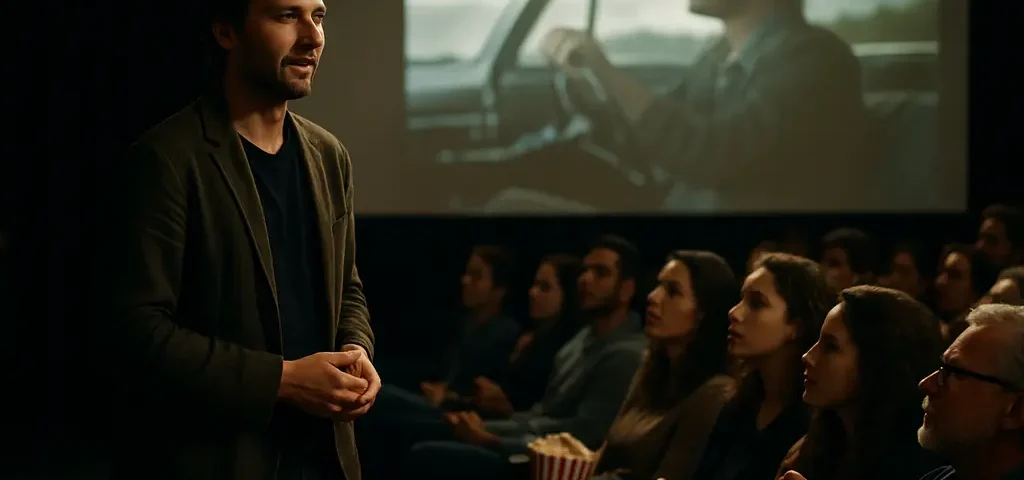
Confirmed — Doc.Boston Streaming sat at the center of the festival’s 2026 audience strategy after the sixth edition had concluded by September 10, 2026. The official 2026 program said Doc.Boston presented four in-person documentary screenings, carried a Streaming Selection through August 17, 2026, and included 21 films from around the world in the official selection Doc.Boston 2026 program. Market analysis — that structure treated online access not as a side channel, but as part of how a compact documentary festival could extend attention beyond a single screening room.
Why Doc.Boston Streaming Mattered After Screenings
Doc.Boston Streaming Extended The Festival Window
Confirmed — the in-person portion of Doc.Boston 2026 had ended before September 10, 2026, while the Streaming Selection remained available through August 17, 2026. Market analysis — the extra online window changed the time pressure around audience participation. A viewer who could not attend a scheduled theater screening still had a defined period in which to encounter selected work. For nonfiction cinema, where films often depend on discussion, institutional word of mouth, and targeted communities of interest, that added time can matter even when public viewer totals are not available.
Opinion — the most useful reading of the 2026 format is not that streaming replaced the room. The better reading is that the room and the online window served different audience behaviors. A theatrical screening can concentrate attention and give filmmakers a direct response from a gathered audience. A streaming window can widen access for viewers whose schedules, location, caregiving duties, transportation limits, or health concerns make attendance harder. Those are cultural access questions, not only technical ones.
Festival Scale Shaped The Audience Question
Confirmed — the official selection included 21 films, and the reported in-person program included four documentary screenings. Market analysis — that gap between total selected films and physical screening capacity shows why a streaming component can be meaningful for a smaller festival. Without making unsupported claims about revenue, reach, or completion rates, the available facts support a narrower conclusion: the online selection gave more films a public-facing festival pathway than the in-person schedule alone appeared to provide.
Reviewed — this model also changes how audiences understand selection. If viewers see streaming titles identified as part of the same festival identity, they may be less likely to treat those films as secondary programming. That depends on presentation, rules, and awards treatment. In 2026, Doc.Boston’s submission language made that point more clearly than many casual festival descriptions do.
Awards, Access, And Audience Signals
Doc.Boston Streaming Kept Award Status Intact
Confirmed — Doc.Boston’s FilmFreeway guidelines stated that selected filmmakers in the Streaming Selection received official selection status and eligibility for all awards, the same as in-cinema selections Doc.Boston FilmFreeway guidelines. Market analysis — that rule matters because status is a form of festival currency. For filmmakers, “official selection” can support future submissions, grant applications, press outreach, and conversations with distributors or community partners. If streaming-selected films were treated as lesser entries, the online program would risk becoming a holding area. The documented rule instead placed streaming titles inside the festival’s recognized award structure.
Confirmed — the Streaming Selection also included an Audience Choice Award for the film that attracted the highest number of online viewers during the streaming window. Market analysis — this created a direct audience signal, even though the supplied research does not include the final public viewer numbers for Doc.Boston 2026. The award design rewarded reach within the streaming period, which made audience behavior visible as part of the festival’s value system.
Viewer Counts Can Clarify Interest, But Not Meaning
Market analysis — an award based on the highest number of online viewers can be useful, but it should be read carefully. A high viewer count may indicate effective outreach, a resonant topic, a filmmaker’s community network, or audience curiosity about a subject. It does not automatically prove that one film had stronger artistic achievement than another. Festivals often balance several forms of judgment: jury assessment, audience response, programming taste, and mission fit. Doc.Boston 2026’s streaming audience award appears to have added one measurable signal to that mix.
Opinion — the cultural value of the Audience Choice structure lies in its acknowledgment that documentary audiences are active participants in a film’s life. A documentary can gain force when viewers carry it into classrooms, local organizations, online conversations, family discussions, or policy debates. Streaming can support that kind of movement because it gives viewers more control over timing. The risk is that raw attention can favor subjects with built-in recognition. The opportunity is that smaller films can ask their own communities to gather around a defined festival window.
The Distribution Question For Small Festivals
Streaming Was Not The Same As A Major Deal
Confirmed — the research provided for this report does not state that Doc.Boston 2026 films received U.S. distribution deals from major platforms. Market analysis — that absence matters. Festival streaming should not be confused with broad commercial distribution. A festival window may offer legitimacy, discoverability, and a short-term audience path, but it does not guarantee long-term availability. For documentary filmmakers, that distinction can shape expectations after selection.
Market analysis — the 2026 Doc.Boston model points to a middle space between a one-night screening and a national platform release. That middle space can be culturally valuable because many documentaries serve audiences that are passionate but dispersed. A film about a specific community, historical subject, artistic practice, or social issue may not need mass-platform scale to matter. It may need the right viewers, enough time to reach them, and a festival frame that signals editorial care.
Reviewed — Biff Award has also examined how recognition can affect emerging nonfiction filmmakers through the case of emerging U.S. documentary filmmakers. Market analysis — that connection is relevant because festival streaming and awards recognition both help answer the same question: how does a documentary travel from a filmmaker’s circle to a wider public without losing its context?
Online Access May Broaden Who Feels Invited
Opinion — documentary festivals often function as cultural filters. They tell audiences which stories deserve a concentrated look. When part of that filtering happens online, the invitation changes. Viewers no longer need to be near the venue, free at a precise screening time, or familiar with festival etiquette. That can make the audience feel less exclusive, though the degree of expansion cannot be measured here without Doc.Boston-specific viewer data.
Market analysis — the most cautious claim is also the strongest supported one: Doc.Boston 2026 used streaming to lengthen access, maintain selection status, and attach an audience award to online viewing. Those facts do not prove total reach, demographic change, or long-term distribution outcomes. They do show a festival format built around more than physical attendance. For readers following cross-festival documentary culture, related coverage at Noir Whale often frames audience behavior as part of a film’s public meaning rather than a separate marketing concern.
Doc.Boston 2026 Streaming And Audience Reach
The Cultural Signal Was Modest But Clear
Confirmed — Doc.Boston 2026 combined in-person documentary screenings with a Streaming Selection that remained available through August 17, 2026. Confirmed — the streaming-selected filmmakers retained official selection status and award eligibility, and the online program included an Audience Choice Award tied to viewer totals during the streaming window. Market analysis — taken together, those rules gave Doc.Boston Streaming a defined cultural function: it extended access while preserving the symbolic value of festival selection.
Opinion — the strongest lesson from Doc.Boston 2026 is not that every documentary festival should move online, nor that streaming solves the distribution problem for nonfiction film. The supported lesson is more limited and more useful. A festival can use a streaming window to invite broader participation, give selected films more time to find viewers, and treat online audience engagement as part of the awards conversation. Without public streaming totals, the size of that audience remains uncertain. Yet the structure itself shows how a small documentary festival can use digital exhibition to keep films in public circulation after the theater lights come up.