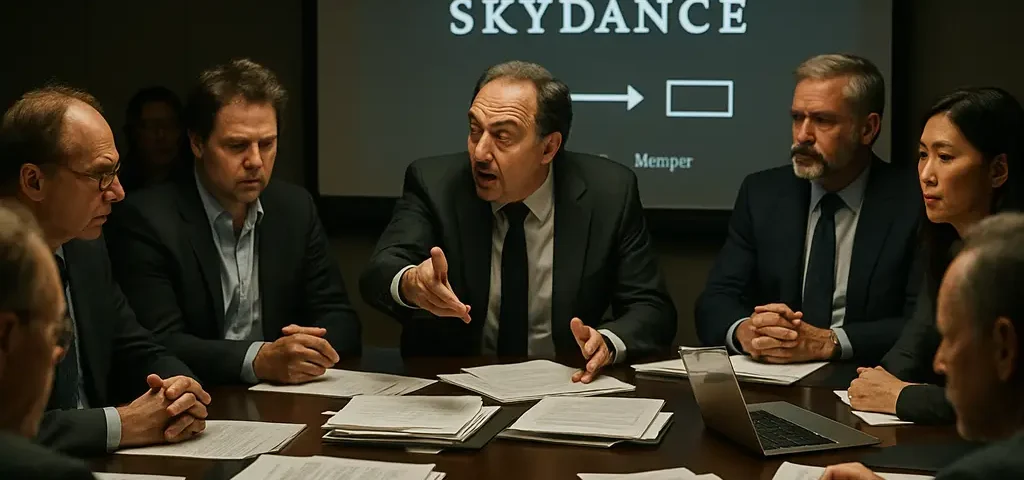
Confirmed: The Skydance merger moved from contested proposal to completed industry fact on October 6, 2026, when Paramount Skydance completed its acquisition of Warner Bros. Discovery for about US$110 billion and the combined company was renamed Skydance Corporation, according to an SEC exhibit. The cultural reaction did not end with the closing date. It shifted from whether the deal should happen to what kind of film, television, news, and streaming culture a larger studio owner may now encourage or constrain.
Why The Skydance Merger Became A Cultural Test
Skydance Merger Concerns From Creators
Confirmed: Before the deal closed, more than 1,000 filmmakers, actors, and other industry professionals signed an April 2026 letter warning that the transaction could reduce competition, deepen media consolidation, increase costs, and narrow opportunities for creators. The named signatories in the supplied research included Jane Fonda, Joaquin Phoenix, and Mark Ruffalo. The importance of that letter was not simply the number of signatures. It framed the deal as a cultural access issue, not only a corporate control issue.
Market analysis: The concern from creative workers centered on fewer places to sell projects, fewer development lanes, and less room for stories that do not fit a large company’s preferred risk profile. In film and television, market concentration can affect which pitches receive early money, which scripts survive development, and which completed titles receive theatrical or streaming support. That does not prove a specific project was blocked. It does show why creators viewed the combination of Paramount and Warner Bros. as more than a balance-sheet event.
Opinion: The reaction also reflected a broader fear inside the creative community: that scale can make a company better at managing franchises while making it less patient with uncertain or culturally specific work. Independent cinema, mid-budget adult drama, documentary, animation, and regionally rooted stories all depend on a mix of buyers and distributors. If creators feel they are pitching to fewer decision-makers, the cultural field can feel narrower even before any public slate reduction appears.
Audience Trust Was Part Of The Debate
Market analysis: Audience impact is harder to measure than creator opposition because the supplied research does not include polling of viewers. Still, the audience issue is visible in the concerns themselves. Viewers encounter consolidation through release patterns, streaming libraries, local theater access, price pressure, and perceived editorial independence. A company can promise more films and broader licensing, yet audience trust depends on whether those commitments are felt through varied programming rather than only through brand scale.
Confirmed: Creative distrust also extended to leadership and editorial norms. The supplied research notes concerns tied to potential layoffs, CBS News changes under Bari Weiss, and the cancellation of The Late Show With Stephen Colbert, which some critics viewed as signs of political influence and weakened long-standing news and creative practices. Those critiques should be treated as stated concerns rather than settled proof of motive. They matter because entertainment companies do not only distribute stories; they also shape public forums, late-night commentary, and news identity.
The Legal Fight Changed The Public Frame
State Challenges Put Competition In Cultural Terms
Confirmed: On July 13, 2026, a coalition of 12 Democratic state attorneys general sued to block the transaction, arguing that it violated antitrust law and would create a “news and entertainment behemoth” harmful to competition in news, film, streaming, and creative labor markets, as reported by The Washington Post. On July 20, 2026, a federal judge issued a temporary restraining order that paused the transaction while the challenge proceeded.
Market analysis: That legal sequence gave cultural concerns a formal competition frame. Antitrust cases often sound technical, but the public argument here reached into the everyday mechanics of screen culture: who employs writers, who buys scripts, who decides theatrical windows, who licenses older titles, and who controls news distribution. The case did not make every creative objection legally decisive. It did, however, connect labor-market worries with audience-facing questions about choice and viewpoint range.
Confirmed: The U.S. Department of Justice closed its antitrust investigation in mid-June 2026 after concluding that the transaction was not likely to harm competition in theatrical development, production, or distribution. The supplied research says the department cited competition from non-legacy studios such as A24, Blumhouse, and NEON, along with streaming services entering theatrical release. That finding became part of the defense of the transaction, even as state officials and many creators continued to question its effects.
Guild And Labor Concerns Stayed Active
Confirmed: The Writers Guilds of America West and East filed a lawsuit on July 14, 2026, citing potential harm to writers, including reduced leverage, fewer development deals, and weaker labor conditions. The supplied research states that the guilds settled the lawsuit on September 21, 2026, while still voicing concern about continuing effects. That distinction matters. A settlement can resolve a legal dispute without resolving the underlying anxiety among working writers.
Market analysis: For writers, directors, editors, producers, and below-the-line workers, consolidation is often felt through bargaining power. If fewer buyers control more distribution channels, a creator’s fallback options may weaken. That can affect pay, approvals, creative notes, and the willingness to take formal risks. The Skydance merger therefore became a symbol of a larger labor question: whether bigger entertainment groups can support more production while still preserving meaningful competition for talent.
Promises On Theatrical Output And Licensing
The Thirty-Film Pledge Became A Key Defense
Confirmed: Paramount Skydance defended the transaction by committing to release at least 30 high-quality films annually in theaters with a minimum 45-day theatrical window. The company also said it would continue licensing content to third parties, arguing that the combination would increase output and benefit creative workers. Those pledges became central to the company’s public case because they addressed two major areas of concern: theatrical scarcity and closed streaming ecosystems.
Market analysis: A numerical release promise can reassure exhibitors and some filmmakers, but it does not settle questions of genre range, budget mix, marketing support, or regional access. Thirty theatrical releases could represent a broad slate across franchise, comedy, drama, animation, horror, documentary, and international-facing work. It could also tilt heavily toward safer properties. The cultural effect will depend on the kind of films made, how long they are supported, and whether third-party licensing keeps older and non-franchise material visible beyond one corporate platform.
- Confirmed: The company promised at least 30 theatrical releases each year.
- Confirmed: It also promised a minimum 45-day theatrical window.
- Market analysis: The cultural value of those pledges depends on slate variety, not only release count.
Opinion: The theatrical pledge is best read as a testable commitment rather than a cultural guarantee. Audiences and filmmakers can later judge whether the output includes riskier work, new voices, and films aimed beyond established brands. For related coverage across the same publishing network, visit Noir Whale for insights into screen culture and audience behavior trends.
Third-Party Licensing May Shape Discovery
Market analysis: Licensing matters because discovery does not happen in one place. Viewers often find films through rotating streaming libraries, cable packages, repertory availability, festival attention, and social recommendation. If a consolidated studio keeps licensing active, some audience choice may be preserved. If licensing tightens over time, discovery could become more dependent on one company’s own platform priorities. The supplied research supports the existence of the licensing promise, but it does not yet provide post-closing evidence of how the policy will be applied.
Market analysis: This is where cultural and business questions meet. A company may release more films while still narrowing the kinds of stories that receive strong support. A studio may license content while favoring its highest-value library assets. A theatrical window may protect cinemas while still leaving smaller films with limited marketing. The Skydance merger will be judged less by the announcement language than by release calendars, acquisitions, labor terms, and access for audiences outside the biggest media markets.
Global And Independent Film Implications

European Concerns Focused On Range
Confirmed: The supplied research states that European film and audiovisual trade groups expressed alarm about the global influence of U.S. studios consolidated under Skydance. It also notes that a March 2026 report in Le Monde described European professionals questioning whether Warner Bros. under Skydance would maintain a slate stretching from arthouse work to blockbuster fare. That concern fits a long-running tension in global screen culture: Hollywood scale can expand distribution, but it can also crowd attention around the most exportable properties.
Market analysis: For non-U.S. filmmakers, the issue is not only whether a Hollywood studio releases local-language or auteur-driven work. It is whether the new corporate structure leaves room for varied financing partnerships, festival-to-theater pathways, and meaningful international curation. A larger company can bring capital and reach, but cultural diversity depends on greenlight choices and patient distribution. The supplied research does not prove that diversity has already declined after October 6, 2026. It shows that concern was present before the closing and remained relevant after it.
Independent Film Faces A Buyer Question
Market analysis: Independent film depends on a chain of opportunity: development grants, private financing, festivals, sales agents, distributors, streamers, theaters, and awards attention. Studio consolidation affects that chain when it changes how many serious buyers exist for finished films or emerging filmmakers. If Skydance Corporation uses scale to buy and release more independent work, some fears may soften. If acquisition lanes narrow, the anxiety expressed by creators in 2026 will look more justified.
Market analysis: Biff Award has examined these questions in a related analysis of the Paramount Warner cultural stakes, where ownership, archives, news trust, theaters, and creative access are treated as connected questions rather than separate issues. That framing remains useful after the closing because a merger’s cultural meaning rarely appears all at once. It emerges through repeated decisions: what gets made, what gets shelved, what gets licensed, and who gets hired.
Cultural Reactions To The Skydance Merger
Confirmed: As of October 18, 2026, the transaction had closed, the combined company had taken the Skydance Corporation name, and the debate had moved into a post-closing phase. The main confirmed concerns in the supplied research involved competition, creator opportunity, labor leverage, job losses, local production, editorial independence, theatrical access, licensing, and global influence.
Opinion: The most revealing feature of the backlash was its breadth. The Skydance merger drew concern from performers, writers, state officials, European trade voices, and critics of media consolidation because it touched several cultural systems at once. Film studios are not only producers of entertainment products. They are employers, distributors, archive stewards, news owners, theatrical partners, and gatekeepers for public storytelling.
Market analysis: The strongest defense of the deal rests on promised output: at least 30 theatrical films each year, a 45-day minimum window, continued licensing, and the claim that competition from newer studios and streamers will limit harm. The strongest criticism rests on power: fewer major legacy buyers, weaker leverage for creative labor, possible job losses, and a fear that cultural variety may be filtered through fewer corporate priorities.
Opinion: The cultural meaning of the Skydance merger will depend on evidence that accumulates after October 6, 2026. A varied slate, real theatrical support, durable licensing, and fair creative terms would challenge the darkest readings of consolidation. A narrower slate, reduced labor leverage, or weaker support for local and independent production would reinforce the concerns raised before the closing. For now, the creative community’s reaction should be read neither as panic nor as resistance to scale itself. It is a cautious warning that size in media carries cultural obligations, especially when one company inherits brands, archives, workers, and audiences built across generations.