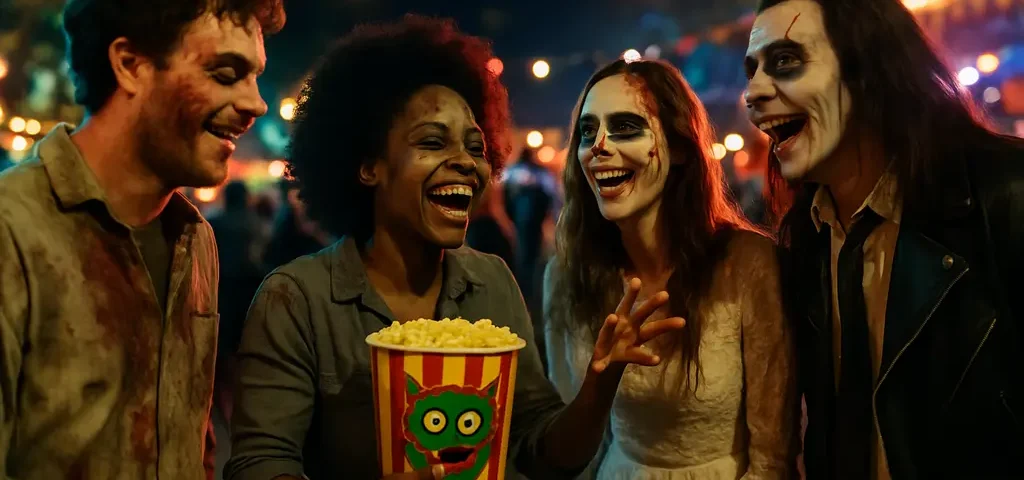
Confirmed: Screamfest 2026 highlights arrived after the festival ran from October 6–15, 2026, at the TCL Chinese 6 Theatres in Hollywood, Los Angeles. The event opened on October 6 with the world premiere of The Night Driver, starring Josh Lucas, David Arquette, and Alyssa Milano, a detail reported in More Horror’s opening-night report. Because the festival had already ended by October 19, 2026, the useful question is no longer what viewers might see, but what the program, awards, and audience-measurement experiment suggested about horror filmmaking at this specific moment.
Screamfest 2026 Highlights After The Festival
Screamfest 2026 Highlights In Context
Confirmed: The 26th annual edition included 8 world premieres, 6 North American premieres, 1 U.S. premiere, and 3 West Coast premieres among competitive features and shorts, according to the festival’s first-wave lineup announcement. That mix positioned the festival as both a discovery platform and a regional access point for films moving through the genre circuit. In festival terms, those categories matter because they shape how a title can be framed for press, distributors, programmers, and early horror audiences.
Market analysis: Those Screamfest 2026 highlights matter less as a raw count than as a signal of programming balance. World premieres can give a festival cultural first-contact value, while North American and U.S. premieres can connect international horror to domestic viewers. West Coast premieres, meanwhile, can build Los Angeles visibility without requiring every film to be entirely unseen. For independent genre filmmakers, that combination can create several routes into audience awareness rather than a single path based on a top-tier world premiere.
Confirmed: The festival also introduced ScareScore, an app measuring moviegoers’ biometric responses during screenings through heart rate, heart-rate variability, and movement. Market analysis: That made audience response part of the festival story in a more literal way than applause, exit chatter, or social posts. Horror has always depended on visible and audible audience reaction, but Screamfest’s experiment treated fear response as data that could be gathered collectively. Readers interested in broader trends in how audience measurement is evolving may find Pilot Pointer, a related network site, to be a useful resource for further exploration.
Premieres, Prizes, And Genre Signals
Awards Favored Craft As Well As Impact
Confirmed: Nick Kozakis’s Kick On won Best Picture, Best Director, and Best Make-Up at the festival. That cluster of awards is notable because it tied the top feature recognition to both authorship and practical craft. Market analysis: In horror, make-up is not a secondary technical category. It can determine how a body-horror image lands, whether violence feels stylized or tactile, and whether a film’s threat has material force on screen. A title winning across picture, direction, and make-up suggests a jury or awards process responding to a film as a coordinated genre object rather than to a single element.
Confirmed: Performance awards also spread attention across different works. Javier Botet won Best Actor for GUMMY, while Laura Im won Best Actress for Valley View Motel. Best Cinematography went to Santiago Otoya for Postmortem, and Best Editing was awarded to Jeanne Signé and Edouard Alvado for Nine. Market analysis: These categories point to a horror field where performance, camera design, and rhythm remain central to reception. A scare rarely comes from concept alone; it is built through bodies, framing, duration, silence, and interruption.
Confirmed: The shorts program also had a defined awards profile. It Helps, directed by J. Zachary Thurman, won Best Short. Newcomer, directed by Sam Shapson, won Best Student Short. Avant de Rentrer, directed by Arthur Bonneau, won Best Animated Short. TV Dad, directed by Sam Ripley, claimed the Short Film Audience Choice Award. Market analysis: The presence of a Short Film Audience Choice Award gave the shorts program a direct viewer-facing marker alongside juried or category-based recognition. That is especially relevant in horror, where short-form work can test a premise, tone, creature idea, or punchline with unusual speed.
Confirmed: The festival’s eligibility guidelines specified that competing short films had to be no more than one year old at the time of the festival, meaning eligible 2026 short submissions were produced in or after late 2025. Market analysis: That recency requirement kept the shorts program close to current production habits. It also made the shorts slate a more immediate gauge of what emerging horror filmmakers had been making in the months just before the October 2026 festival.
Audience Response Became A Measured Object

ScareScore Turned Reaction Into A Festival Metric
Confirmed: The ScareScore initiative was presented as a biometric response tool, and the research set identifies a “Biometrically Decided Best Feature” designed to go to the film that triggered the strongest collective scare response. The provided notes do not identify the winner of that specific biometric award, so any claim about its result would be unsupported here. Market analysis: Even without a named recipient in the available research, the category is still revealing. It shifted part of the festival conversation from what judges or critics selected toward what viewers’ bodies appeared to register during screenings.
Opinion: That move is intriguing but should be treated with caution. Biometric response can indicate arousal, surprise, stress, or movement, but it does not automatically explain why a film worked. A viewer might move because a scare landed, because they laughed, because they were uncomfortable, or because they shifted in a theater seat. Heart rate can be meaningful, yet it needs context. Horror response is emotional, social, physical, and interpretive at once. ScareScore offered one reading of that response, not the full account of audience engagement.
Market analysis: The experiment also sits inside a wider genre-festival pattern: horror events increasingly balance premieres, filmmaker access, repertory energy, audience awards, and community identity. Biff Award’s recent coverage of Popcorn Frights horror trends observed a similar pressure point around how festivals serve both local crowds and wider discovery habits. Screamfest’s biometric test added a distinct wrinkle by asking whether the audience body could become part of the awards conversation.
Confirmed: The research notes do not provide attendance figures, audience demographics, review aggregates, streaming-rights data, or box-office outcomes for the selected films. Market analysis: That limits how far any audience-response argument can go. The strongest supported claim is that Screamfest 2026 formally integrated audience measurement through ScareScore and recognized viewer preference through at least one audience-choice short award. Broader claims about crowd size, commercial demand, or long-term release value would require more evidence.
What Screamfest 2026 Highlights Mean For Horror
Market analysis: The most useful reading of Screamfest 2026 highlights is that the festival treated horror as both craft and response. The award winners emphasized direction, make-up, performance, cinematography, editing, and short-form execution. The ScareScore initiative, by contrast, asked whether fear could be tracked as a shared physical event. Those two ideas are not opposed. Horror filmmaking depends on craft choices that produce audience sensation, and audience sensation often feeds back into how a film’s success is discussed.
Opinion: The caution is that measurement should not replace interpretation. A film that produces the highest biometric spike is not automatically the most resonant, original, or durable horror work. A slow-burn film may disturb viewers after the screening rather than during a single measurable jolt. A comic horror short may earn loyalty through timing rather than elevated heart rate. A performance-driven feature may stay with audiences because of mood or character, not because it created the loudest scare.
Market analysis: Still, Screamfest’s October 2026 edition reflected a genre culture willing to test new ways of describing audience response. That is significant for festivals because horror audiences are often highly active, vocal, and format-aware. They understand the difference between a midnight crowd reaction, a jury prize, a regional premiere, and an online discovery. Screamfest 2026 highlights showed a festival using all of those signals: premieres to introduce work, awards to recognize craft, shorts categories to identify newer voices, and biometric measurement to frame fear as a shared theatrical event. The result was not a simple ranking of what horror should become, but a useful record of how one major genre festival documented horror’s connection to viewers after the screenings ended.