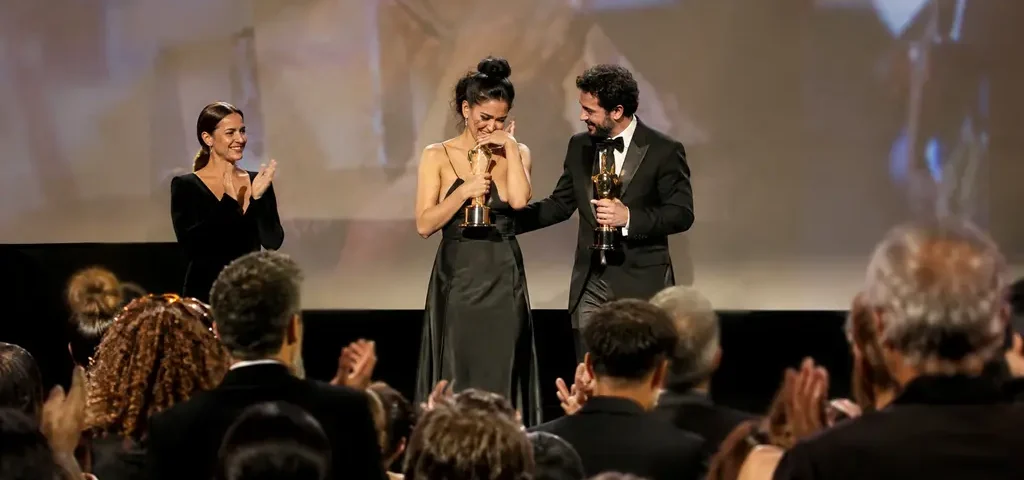
Market analysis: Indie Voices gained measurable attention across 2026 festival awards, but the clearest lesson was not that the independent sector had solved access. The stronger reading is more cautious: festivals created public evidence for new and underrepresented filmmakers, while the wider film business still showed large gaps in directing access, distribution, and long-term audience reach. The pattern across Seattle, Sundance, Venice, Slamdance, and the IndieX Film Fest Annual Awards was one of visibility under pressure rather than simple progress.
Why Indie Voices Gained Ground In 2026
Indie Voices And The Discovery Function
Confirmed: The 52nd Seattle International Film Festival, held from May 7 to May 17, 2026, screened 203 films from 71 countries. Its slate reported nearly 49% of filmmakers identifying as women or non-binary, 49% as BIPOC, and 19% as part of the LGBTQIA+ community. SIFF also reported that 62% of its feature films came from first- or second-time filmmakers, while 67% of all films lacked U.S. distribution.
Market analysis: Those SIFF figures matter because they describe more than programming taste. A festival with a high share of first- and second-time filmmakers can work as a discovery platform, especially when many films have not yet secured U.S. distribution. Indie Voices were not strengthened only by being selected; they were strengthened because the festival setting gave audiences, juries, programmers, critics, and potential partners a structured reason to encounter work that had not yet entered the commercial release system.
Audience Awards As Public Signals
Confirmed: SIFF announced juried competition and audience awards on May 17, 2026, with recognized titles including The Life We Leave, Edie Arnold is a Loser, Mārama, The Garden We Dreamed, Shape of Momo, Lucky Lu, and Birds of War. The awards covered narrative, documentary, and short-film categories.
Market analysis: Audience awards carry a distinct kind of value in independent film. Jury prizes often signal craft recognition or industry alignment, while audience awards help demonstrate that a film has connected with people outside a selection committee. That does not guarantee theatrical sales, streaming placement, or critical longevity. It does, however, give filmmakers a record of response that can support later festival bookings, pitches, community screenings, and distributor conversations. For Indie Voices, this mattered because public response could become part of the case for a film’s life after its first major screening.
Awards Turned Visibility Into Evidence
Seattle And Sundance Showed Different Routes
Confirmed: At Sundance 2026, Beth de Araújo’s Josephine won both the U.S. Dramatic Grand Jury Prize and the Audience Award. The film, centered on an 8-year-old girl who witnesses a sexual assault, was based on de Araújo’s own childhood experience. Sundance announced its 2026 award winners on January 30, 2026.
Market analysis: A dual jury-and-audience win at Sundance created a different kind of validation from a broad festival slate statistic. It suggested that one film could satisfy both institutional judging and public response inside a major independent forum. The subject matter also showed how personal narrative and difficult experience could move through festival structures without being reduced to prestige shorthand. That kind of recognition is not risk-free; films rooted in trauma can be discussed too narrowly if coverage treats biography as the whole artistic case. Still, the documented awards outcome showed that audience engagement and juried recognition could converge around challenging independent work.
Venice Exposed The Ceiling
Confirmed: The 2026 Venice Film Festival took place from September 2 to September 12. Woman Unknown, directed by May el-Toukhy, won the Golden Lion for Best Film. In her remarks, el-Toukhy highlighted that the film was the only feature in competition solely directed by a woman, and she called attention to the lack of equal opportunity for female filmmakers. During the same competition, only one of 21 fiction films in the Best Film competition was directed by a solo female director, while one other entry had a female co-director.
Market analysis: Venice showed the double edge of festival recognition. A top prize for Woman Unknown gave extraordinary visibility to a female-directed film, yet the competition makeup revealed how rare that position remained. The win therefore worked less as proof of parity than as a public contradiction: a female filmmaker could receive the festival’s highest honor while still standing almost alone in the competition field. That distinction is central to any serious reading of 2026 awards. Celebration and critique were not opposites; they arrived together.
What The Data Says About Inclusion
Festival Gains Remained Uneven
Confirmed: The 2024-25 “Indie Women and Festivals Report,” covering more than 800 films and 11,900 credits, reported that women held roughly 30% to 35% representation across key behind-the-scenes roles at participating festivals, with the report describing continued gains over prior years in the festival sample Indie Women and Festivals Report.
Market analysis: That data helps keep festival optimism in proportion. A 30% to 35% range is meaningfully different from exclusion, but it is not equality. It suggests that festivals can offer more room for women filmmakers than many mainstream measures, while still reflecting barriers in financing, hiring, production scale, and access to high-profile slots. The practical effect is that award wins by women and non-binary filmmakers should be read as signs of movement, not as evidence that representation problems have been resolved.
Theatrical Directing Lagged Behind
Confirmed: The 2024–2025 UCLA Hollywood Diversity Report found that among the 120 top theatrical film directors, about 22.5% were BIPOC and about 10% were women UCLA Hollywood Diversity Report.
Market analysis: The comparison between festival participation and top theatrical directing roles is stark. Independent festivals may identify, honor, and amplify filmmakers from underrepresented backgrounds, but the largest theatrical opportunities still appeared far more restricted by the UCLA measure. That gap helps explain why award platforms remain culturally important. Festivals can create recognition before the commercial industry fully responds, but they cannot replace hiring authority, financing access, marketing budgets, or distribution commitments.
Distribution Still Decided The Afterlife

Undistributed Films Needed More Than Laurels
Confirmed: SIFF reported that 67% of all films in its 2026 slate lacked U.S. distribution. Slamdance 2026 also connected some winners with practical opportunities: You Look Fine by J. Snow won the Unstoppable Feature Grand Jury Prize, and Utopia offered the film a theatrical distribution deal. Other winners received access to digital distribution platforms and production services.
Market analysis: These examples show why distribution is the pressure point after festival celebration. A laureled film still needs pathways to viewers, and those pathways vary widely. A theatrical offer, digital distribution access, or production-service support can extend a festival win into a more durable career step. Without that bridge, an award may remain a respected credential with limited public reach. That is why the strongest festival ecosystems connect recognition to audience access rather than treating prizes as the endpoint.
Shorts And Global Reach Built Different Pathways
Confirmed: The IndieX Film Fest Annual Awards took place at Regal LA Live in Los Angeles on May 30, 2026. Sweet Molly from the United States won Best Indie Short. Aicha from Morocco won Best Women Short, Best Original Screenplay, and Best Editing. Postman from India won Best Drama Short and Best Cinematography.
Market analysis: Short-film awards often function differently from feature prizes. They may not lead directly to conventional theatrical release, but they can help establish craft credibility, attract collaborators, and place a filmmaker in a transnational conversation. The IndieX results showed how short-film categories can make room for work from multiple countries and different production contexts. For a broader perspective on how audience discovery is being discussed across related arts coverage, readers might want to check a related site that sits within the same network of culture-focused publishing.
Strengthening Indie Voices After The Awards
Recognition Needs Audience Memory
Opinion: Indie Voices became stronger in 2026 when festivals did three things at once: they selected work from less established filmmakers, gave public awards to films outside the most commercially secure channels, and made inclusion gaps visible rather than smoothing them over. The most useful awards coverage should hold all three facts together. A festival win can be a breakthrough, a data point, and a reminder of who still lacks access.
Market analysis: This pattern also connects with Biff Award’s previous analysis of independent voices in 2026 festivals, where community screenings, lower-budget production, and renewed attendance were treated as part of the same cultural shift. Awards did not act alone. They worked alongside local audiences, regional press, filmmaker Q&As, distribution experiments, and the credibility that comes from being programmed beside peers.
Opinion: The central lesson from recent winners is careful but clear. Festivals can widen the field of attention faster than the top theatrical market has widened directing access. Yet lasting change depends on what happens after the laurel: whether a film finds viewers, whether a filmmaker receives another opportunity, and whether festival visibility becomes part of a sustained record rather than a brief announcement. That is where independent film culture either deepens its gains or lets them fade.