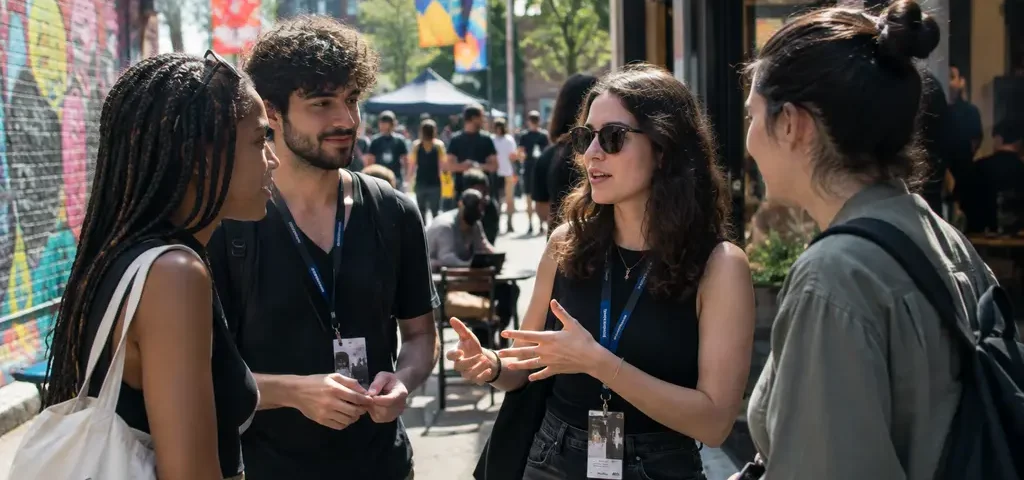
Confirmed: The Bushwick Film Festival held its 19th edition in Brooklyn from October 7 to 11, 2026, and presented nearly 100 independent works across narrative, documentary, animation, episodic, podcast, and screenplay formats. Its stated theme, “Make Time for Your Dreams,” framed the program around creative commitment and the pressure that daily life can place on artistic work. The festival also reported submissions from more than 60 countries, a scale that positioned the event as both a Brooklyn gathering and an international discovery platform, according to the official 2026 festival release.
What The Bushwick Film Festival Program Confirmed
How Bushwick Film Festival Framed Creative Labor
Confirmed: The guiding phrase “Make Time for Your Dreams” was not an abstract slogan attached to the event after programming decisions had been made. It matched a lineup built around filmmakers, characters, and communities trying to hold space for creative or cultural practice under pressure. The research record identifies work, courage, and commitment as the theme’s central ideas, with special attention to ambitions postponed by financial, social, and personal demands.
Market analysis: That framing matters because regional festivals often carry two responsibilities at once. They introduce new work to audiences, and they explain why those works belong together. In this case, the 2026 program suggested that independent film remains closely tied to questions of time: who has it, who is denied it, who sacrifices for it, and who turns limited time into a public act. That made the Bushwick Film Festival less a showcase of isolated titles than a civic event organized around persistence.
Premieres As Discovery Signals
Confirmed: The 2026 edition included 13 world premieres. The listed world-premiere titles included Symbiontes, described in the research as a Colombian sci-fi horror film, along with Ayan, Crikey, Fantasy Life, Somehow in the City, and Sixteen. The program also included New York or U.S. premieres such as Wet Under Blue Sky, After the Funeral, Dr. Sam, and West Side Familia.
Market analysis: Premiere status is not the same as artistic value, and it should not be treated as a quality score. Still, it does show how a festival asks audiences and industry guests to pay attention. A world premiere gives a film its first public context. A U.S. or New York premiere can place an existing work into a new cultural conversation. For a Brooklyn festival, that distinction is useful: the event can function as a first stop for some filmmakers and a city-specific point of contact for others.
Films That Centered Place, Memory, And Belonging
West Side Familia And Public Space
Confirmed: West Side Familia appeared in the festival context as a feature documentary about a Puerto Rican-led biker crew on Manhattan’s Upper West Side. Its description tracks the group’s effort to preserve community, traditions, and public memory amid gentrification and cultural erasure. The film’s listed themes include intergenerational activism, identity, neighborhood rituals, and the raising of the Puerto Rican flag, as described on its BlackStar Film Festival page.
Opinion: Within the Bushwick setting, that film carried a clear resonance. The research does not support claims about audience reaction, awards outcome, or sales interest, so those should remain outside the analysis. What can be said is that West Side Familia aligned with a festival program attentive to how neighborhoods remember themselves. Public space is not neutral in such stories. A flag, a ride, a sidewalk gathering, or a repeated ritual can become a record of presence when longtime communities feel pushed out of view.
Ayan, Wet Under Blue Sky, And Movement Across Borders
Confirmed: Ayan was identified as a documentary following students from Yakutia who attend universities in the United States. The listed themes include home, identity, and belonging across borders. Wet Under Blue Sky was presented as a U.S. premiere and described as a drama about a boxer facing the long-term consequences of a career in the ring, extending the fight beyond the ring itself.
Market analysis: Read together, those descriptions show a program interested in displacement without reducing it to geography alone. Ayan appears to approach movement through education, distance, and identity formation. Wet Under Blue Sky appears to treat bodily consequence as a form of lived memory. One film crosses borders; the other follows damage beyond the arena where it was first produced. Both fit a festival theme about commitment because both descriptions ask what remains after a person chooses, or is forced, to keep going.
Format Expansion And Audience Behavior
Animation And Podcasts Entered Competition
Confirmed: The 2026 edition added competitive categories for animation and podcasts for the first time, with dedicated juries for each. Screenplay readings also returned, and the program included a Series/Episodic showcase. An animation showcase took place on Saturday, October 10, 2026.
Market analysis: That shift signals how independent festivals are responding to creators who do not work only in feature-length film. Animation can carry personal, political, and experimental storytelling without relying on live-action production resources. Podcasts can extend nonfiction and scripted work into an audio-first form that may reach listeners outside theatrical settings. Episodic work sits between television, streaming, and creator-led distribution. By placing these forms inside competition and showcase structures, the Bushwick Film Festival treated them as central parts of independent media rather than side programming.
Community Programming Treated Attendance As Participation
Confirmed: The event included industry and community programming such as a Made in New York Industry Panel and Connections Mixer, Film Trivia and Game Night, Pints and PowerPoints, and a Saturday night social. Opening Night on October 7, 2026, was presented by Netflix and included filmmaker recognition and a Creative Impact Award given to Cassandra Freeman.
Market analysis: These events suggest that the festival was designed not only for screenings but also for contact between filmmakers, viewers, and local creative workers. That matters for an event reported to draw more than 5,000 attendees per year. Attendance figures alone do not reveal impact, but panels, mixers, readings, and social events can make a festival more useful to artists who need peer networks as much as public exhibition. For related screen-culture coverage within the same publishing network, you can find more insights on adjacent nonfiction and entertainment formats at True Real TV.
Brooklyn Stories And Independent Visibility
Local Films As Cultural Evidence
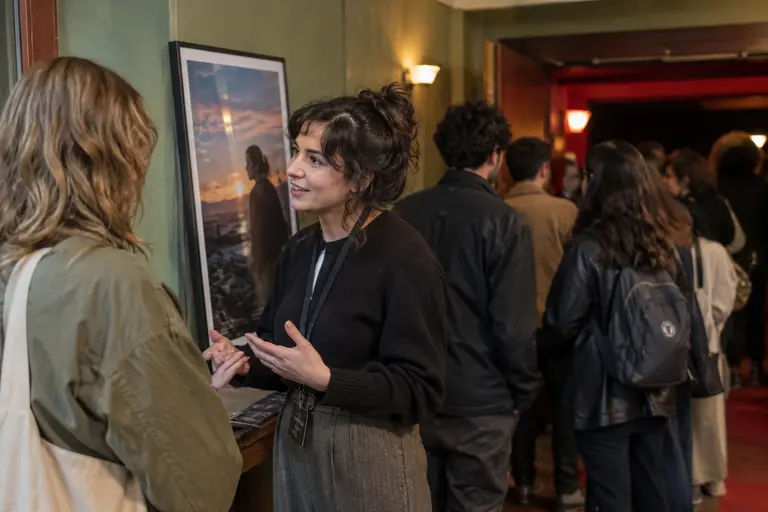
Confirmed: The research identifies multiple New York City and Brooklyn-connected films in the 2026 program, including titles tied to gentrification, nightlife, family, intimacy, and the effort to sustain creative work in Brooklyn neighborhoods. Listed examples include Love New York, Crib Club, A Slice of Home, 1981, Where the Wind Goes, and Intimité.
Opinion: The local emphasis gave the festival a grounded point of view. A Brooklyn-set story can be small in budget and still large in cultural meaning because it records how people use rooms, streets, routines, and relationships. The available research does not provide plot details for every listed title, so the safest reading is thematic rather than evaluative. The program pointed toward local pressure points: rent, community change, family memory, nightlife as social space, and art-making as a difficult form of survival.
Festival Attention Beyond One Weekend
Market analysis: The value of a festival slot often extends beyond the dates of the event, but it should be discussed carefully. A selection does not guarantee distribution, awards momentum, or commercial return. What it can provide is a public context, a screening record, and a chance for audiences to connect films with shared concerns. That is similar to the visibility question raised in Biff Award’s coverage of monthly indie awards, where recognition can help smaller projects remain legible in a crowded field.
Opinion: For the 2026 Bushwick program, that visibility seemed tied less to prestige language and more to community fit. The strongest through-line in the research was not one breakout title or a single acquisition story. It was the alignment between films about identity, memory, labor, and place, and a festival theme that asked audiences to consider the cost of keeping a dream active.
Bushwick Film Festival Cultural Themes In 2026
Market analysis: The Bushwick Film Festival in 2026 used scale, local specificity, and format expansion to make a clear cultural argument. Nearly 100 works, submissions from more than 60 countries, 13 world premieres, and new animation and podcast competitions all pointed to growth. Yet the program’s most meaningful pattern was not size by itself. It was the way the selected films and events returned to questions of belonging, public memory, artistic labor, and neighborhood change.
Opinion: West Side Familia appears to have carried the most direct link between community ritual and cultural preservation. Ayan widened the conversation through migration, education, and identity across borders. Wet Under Blue Sky brought attention to bodily consequence and the afterlife of a chosen profession. The Brooklyn-connected titles gave the program a local frame without making it provincial. Together, they showed how an independent festival can use programming to ask what creativity costs, who protects it, and which communities make it possible.