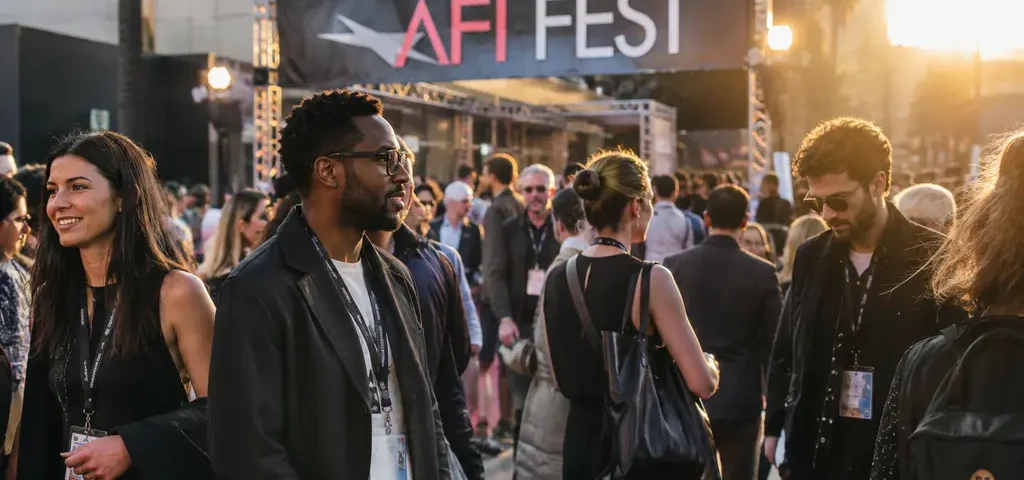
Confirmed: AFI FEST indie voices were central to the 40th anniversary edition, which ran from October 21–25, 2026, at the TCL Chinese Theatres in Hollywood. The festival presented 157 films from 50 countries, according to the American Film Institute’s full lineup announcement, and its programming placed independent, global, and newer filmmakers beside established directors in a high-visibility Los Angeles setting. This article treats the 2026 edition retrospectively because the festival had concluded by October 27, 2026, and it avoids claims about audience response, sales, prizes, or long-term career effects that were not included in the available record.
AFI FEST indie voices After The 40th Edition
AFI FEST indie voices In The Lineup
Confirmed: AFI FEST 2026 included 157 films from 50 countries and marked the festival’s 40th anniversary edition, as stated in the official AFI lineup release. Those figures matter because scale can affect discovery. A small program may give each title more breathing room, while a large program can place emerging artists within a wider field of genres, countries, and career stages. AFI’s 2026 structure leaned toward the second model: breadth as a form of cultural positioning.
Market analysis: The significance of the lineup is not only that it was large. The reported mix of countries, Discovery titles, shorts, documentary selections, and international submissions suggests that AFI FEST used its anniversary year to frame independent cinema as part of public film culture rather than a side channel. That does not prove that every title reached equal attention, nor does it establish a permanent institutional change. It does, however, show a programmed emphasis that audiences, critics, and distributors could read clearly across the slate.
Confirmed Numbers, Cautious Reading
Confirmed: AFI reported that, among official feature and documentary selections, 45% were directed by women and 32% by BIPOC filmmakers. Confirmed: The festival also included 18 Discovery titles, a section described in the research as a space for new, boundary-pushing filmmakers. Those numbers give the discussion a firmer base than broad praise would. They allow readers to see how inclusion appeared in the published program rather than as a vague institutional value.
Reviewed opinion: The numbers should still be read with care. Percentages can identify access within selection, but they do not answer every question about screen placement, press attention, acquisition interest, or post-festival support. A festival can open the door through selection, yet the next phase depends on how films are introduced, discussed, reviewed, and circulated after the screenings. That is where programming becomes audience culture.
Discovery, Shorts, And First Features
Discovery As A Public Signal
Confirmed: The 2026 lineup included 18 Discovery titles. In festival terms, a named Discovery section does more than sort films into a schedule. It tells audiences that unfamiliar names are not secondary to headline selections. That framing can be especially useful for first features and early-career work, where a viewer may not arrive with prior attachment to a director, cast, or distributor.
Market analysis: AFI FEST indie voices gained meaning through this public signal. A discovery label can encourage audiences to treat risk as part of the viewing experience. For emerging filmmakers, the label may also help clarify how the festival wants the work to be seen: not as filler around larger titles, but as part of the festival’s cultural argument. The available research names narrative feature debuts including 9 Temples to Heaven by Thai filmmaker Sompot Chidgasornpongse and Chronicles From The Siege by Palestinian-Syrian filmmaker Abdallah Alkhatib. Those examples point to a new-voices emphasis with a global frame.
Short Films And The Training Pipeline
Confirmed: AFI FEST 2026 included a Short Film Competition of 45 films, while the AFI Conservatory Showcase added 24 short films from recent graduates. That is a substantial short-film presence within the broader program. It also connects public exhibition with training, since the Conservatory Showcase placed recent graduate work into the festival context.
Opinion: Shorts matter because they often show artistic decisions in compressed form. A short can reveal a director’s sense of rhythm, a writer’s control of tone, or a cinematographer’s approach to space without requiring the financing structure of a feature. For audiences, shorts programs can create contact with more filmmakers in a single sitting than most feature slots can. For a festival trying to support less familiar voices, that density has cultural value.
Global And Diverse Programming Signals
Women, BIPOC, And Country Reach
Confirmed: The festival’s official feature and documentary selections included 45% women directors and 32% BIPOC directors. Confirmed: The full program drew films from 50 countries. These figures show that AFI FEST’s 2026 emphasis extended across gender, race, ethnicity, nationality, and geography, at least within the categories reported by the festival.
Market analysis: The country count is significant because global programming changes how audiences compare films. A viewer is less likely to see cinema as a single national conversation when a festival places work from many regions into the same event. That placement can also complicate awards-season habits that often reduce international cinema to a narrow set of contenders. AFI FEST’s 2026 lineup included ten official submissions for the Best International Feature Oscar, which positioned several films at the intersection of festival discovery and awards visibility.
Queer And International Context
Confirmed: The research identifies queer and international cinema as strongly represented, including films such as IVÁN & HADOUM, described as a queer debut, and PROSECUTION, from a German-Korean director addressing neo-fascism. The available notes do not provide full plot details, audience data, or critical reception, so those claims should not be stretched beyond programming context.
Reviewed opinion: The significance lies in placement. When LGBTQ+ stories, non-U.S. settings, and politically engaged films appear inside a major festival program, they are not framed only as niche work. They become part of the public record of what a leading American film institution chose to gather, screen, and promote during its anniversary edition. That does not remove the need for sustained access after the festival, but it does create a visible point of entry.
Institutional Bridges Around Independent Film

Sundance-Supported Work At AFI
Confirmed: Twelve films in the AFI FEST 2026 lineup were supported by the Sundance Institute, according to Sundance’s festival watch note on the Sundance-supported AFI titles. That connection matters because it shows how independent film support can move across institutions. A film may receive development, lab, or grant support in one setting and then gain a different form of visibility through another festival.
Market analysis: This kind of bridge can shape how audiences encounter emerging filmmakers. A Sundance connection may signal earlier institutional validation, while an AFI screening places the work in a Los Angeles festival setting close to awards and industry discussion. Neither fact guarantees distribution, acclaim, or audience growth. Together, though, they show how independent films can pass through several curated systems before reaching wider public recognition.
Awards Positioning Without Overclaiming
Confirmed: AFI FEST 2026 included ten official submissions for the Best International Feature Oscar. That figure gives the festival a clear awards-season dimension, but it should not be read as a prediction of nominations or wins. A submission is a national selection for consideration; it is not the same as Academy shortlisting or nomination.
Opinion: The useful point is cultural rather than predictive. By placing official international submissions alongside Discovery work, shorts, documentaries, and established auteurs, AFI FEST created a program where prestige and discovery could sit close together. This is where AFI FEST indie voices carried practical weight: newer filmmakers were not isolated from titles already moving through formal awards channels.
- Confirmed: The festival ran October 21–25, 2026, in Hollywood.
- Confirmed: The program included 157 films from 50 countries.
- Confirmed: The slate included 18 Discovery titles, 45 short competition films, and 24 AFI Conservatory Showcase shorts.
- Market analysis: These elements made discovery a structural feature of the program, not merely a promotional phrase.
AFI FEST indie voices And Audience Meaning
Market analysis: The audience question is central because festival programming does not matter only inside industry circles. A festival teaches viewers how to assign attention. It can invite them to treat a debut feature with the same seriousness as a film by a well-known auteur, or to read a short-film block as a site of future feature and television talent. AFI FEST’s 2026 program, as documented in the available research, made that invitation through scale, country range, Discovery programming, and short-form exhibition.
Reviewed opinion: The anniversary framing also matters. A 40th edition can become a retrospective celebration of institutional memory. AFI FEST did include established names in the program, with the research noting work by Werner Herzog, Lee Chang-dong, and Céline Sciamma. Yet the same lineup also made room for debut or early features from filmmakers including Sofie Gibson and Ian de la Rosa. The cultural signal is not that older prestige was displaced. It is that prestige and discovery were asked to share space.
Market analysis: That shared space may be the clearest way to understand AFI FEST indie voices after the festival’s October 25 close. The 2026 edition showed how a major festival can use its platform to connect independent filmmaking with global cinema, identity-based representation, training pathways, and awards visibility. For related reading on how representation shaped the same edition, Biff Award’s analysis of AFI FEST diversity offers a connected frame. Readers interested in exploring more perspectives within the same network can head over to Pilot Pointer for additional cultural insights.
Opinion: The lasting value of the 2026 program should not be overstated without post-festival evidence. Selection alone does not secure distribution, income, or career stability. Still, selection can change the first public terms of reception. In that sense, AFI FEST’s focus on independent and emerging work gave audiences a broader map of contemporary cinema: one where new directors, short filmmakers, queer stories, international submissions, and institutionally supported indies could be seen as part of the same conversation.