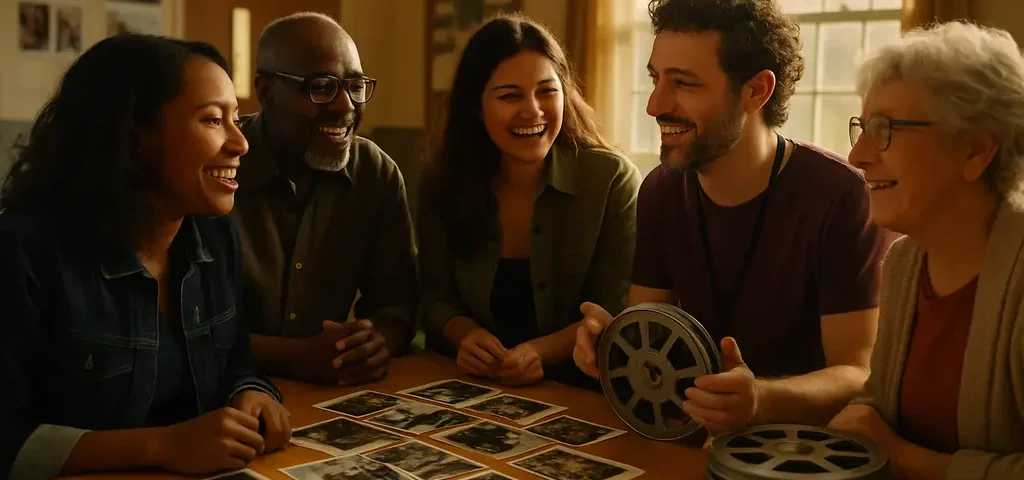
Confirmed: The Once Upon a Time in Harlem case gives the phrase Harlem documentary unusual weight because its recognition is tied to both cultural preservation and formal restraint. As of October 15, 2026, the film had already premiered at major festivals, won the 8th annual Library of Congress Lavine/Ken Burns Prize for Film on September 18, 2026, and was scheduled for a limited U.S. theatrical release beginning on October 16, 2026. The Library of Congress described the 100-minute film as built from a 1972 gathering inside Duke Ellington’s Harlem townhouse, shot by William Greaves and later shaped by David Greaves, with Liani Greaves also part of the production lineage Library of Congress announcement.
Why This Harlem Documentary Recognition Matters
A Prize For Historical Presence
Confirmed: The Lavine/Ken Burns Prize carried a $200,000 award for Once Upon a Time in Harlem. The scale of that prize matters less as a cash figure than as a public signal: the film was not being recognized only as a polished archival project, but as a work whose survival, assembly, and release altered how audiences can encounter a specific cultural moment. The 1972 footage brought together surviving figures associated with the Harlem Renaissance, and the completed film placed that material before contemporary viewers without treating the past as static museum content.
Opinion: Awards can distort film culture when they reduce a work to a seasonal ranking. In this case, recognition functions more usefully as a form of cultural indexing. The award places the film within a chain of preservation, access, and interpretation. That is especially relevant for documentary, where artistic achievement often depends on materials that were not created for a later marketplace. The film’s long path from 16mm footage to a completed release asks audiences to think about unfinished archives not as dormant material, but as cultural records awaiting the right editorial frame.
The Harlem Documentary Form Is Its Argument
Reviewed: The film’s structure has been described as relying on the original 1972 footage rather than contemporary interviews. A review in The Guardian noted that it features no present-day talking-head interviews and allows the recorded conversation to carry debates about Black cultural identity, language, art, and activism The Guardian review. That choice gives the Harlem documentary a distinct relationship to authority. It does not ask later commentators to certify the importance of the gathering. It asks viewers to sit with the participants’ own cadence, disagreement, humor, and intellectual movement.
Opinion: The absence of contemporary interviews can be risky in documentary storytelling. It removes an explanatory layer that many audiences expect. Yet here, that restraint appears central to the film’s cultural claim. The archival voices are not treated as fragments requiring constant translation. They are presented as sufficient, demanding attention on their own terms. That approach changes the viewer’s role from recipient of a guided lecture to witness of a social and artistic exchange.
Festival Visibility And Audience Context
From Premiere To Wider Recognition
Confirmed: According to the research record, Once Upon a Time in Harlem had its world premiere at the Sundance Film Festival on January 25, 2026, in the Premieres section. The film was later recognized for appearing across Sundance, Cannes, Telluride, Toronto, and the New York Film Festival. That path gave the work repeated opportunities to reach critics, programmers, archivists, and documentary audiences before its scheduled limited theatrical release.
Market analysis: Festival circulation can be especially significant for archival nonfiction because it helps create a public frame before wider distribution. A film made from decades-old footage may need context to avoid being received as a specialist item. Festival selection can build that context by placing the work near other contemporary films, inviting critical response, and signaling that archival cinema belongs inside present-tense cultural debate. For readers tracking similar award pathways, Biff Award’s coverage of emerging U.S. documentary filmmakers shows how prizes can expand the public life of nonfiction work beyond one screening or institutional setting.
Audience Engagement Without Simplification
Opinion: The strongest audience value in the film may be its refusal to flatten heritage into reassurance. The 1972 conversation reportedly includes questions of identity and terminology, including tensions around words such as “Negro” and “Afro-American.” Those details matter because cultural heritage is not only celebration. It is also argument, revision, disagreement, and self-definition across time. A Harlem documentary that preserves those tensions gives audiences more than admiration for the Harlem Renaissance; it gives them access to people thinking aloud about legacy while still living near its consequences.
Market analysis: This kind of viewing experience asks more of audiences than a conventional biographical documentary. It may appeal most strongly to viewers interested in Black cultural history, archival cinema, literary history, documentary craft, and intergenerational memory. Coverage across cultural sites demonstrates this, with related film and media writing at NoirWhale showcasing the growing interest in works connecting artistic history with their preservation contexts.
Family Legacy And Archival Authorship
Three Generations In The Credit Line
Confirmed: The film’s production history is unusually bound to family authorship. William Greaves shot the original footage. David Greaves edited and restored the work after his father’s passing in 2014. Liani Greaves was also involved in the production. That three-generation chain changes how the film can be understood. It is not only a work about Black cultural memory; it is also a record of how memory is carried, protected, and reintroduced through family labor.
Opinion: This does not mean the film should be read only as family inheritance. Its subject is broader than one family’s archive. Still, the family dimension shapes its ethical texture. A son finishing his father’s footage is not the same as an outside producer acquiring anonymous material. The editorial act carries both artistic responsibility and personal proximity. That proximity may help explain why the film’s method appears to trust the recorded subjects rather than impose a heavy interpretive apparatus over them.
Editing As Cultural Stewardship
Opinion: The act of shaping roughly four hours of conversation into a 100-minute film is a major storytelling intervention, even when the visible style feels restrained. Archival editing is never passive. It determines who enters first, which exchanges remain, how silence works, and whether a conversation feels like a closed artifact or a living encounter. In this case, the critical attention around David Greaves’ role suggests that the film’s impact depends on an editorial balance: enough structure to give viewers orientation, enough openness to preserve the energy of the original gathering.
Market analysis: That balance has implications for documentary makers working with historical footage. The film shows that archival cinema does not always need contemporary interviews, animated explanation, or heavy narration to reach public recognition. A Harlem documentary built around recorded presence can still travel through major festivals and win a major documentary prize. That does not make the model easy to repeat; it depends on rare material, careful restoration, and disciplined editorial choices. But it expands the set of examples available to filmmakers considering how much present-day explanation their archival projects need.
Once Upon A Time In Harlem And Documentary Storytelling
Recognition As A Public Frame
Opinion: The cultural significance of Once Upon a Time in Harlem rests on the meeting between subject, form, and timing. Its subjects were figures linked to one of the most influential periods in Black American cultural life. Its form resists the comfort of retrospective over-explanation. Its 2026 recognition places the film in front of audiences during a period when archives, authorship, and cultural memory remain active public questions.
Confirmed: The film’s award, festival presence, and scheduled limited theatrical release created a clear public arc by October 15, 2026. Opinion: What makes that arc meaningful is not simply that the film won. It is that the award helped clarify why a recovered conversation from 1972 still has artistic force. The film treats documentary storytelling as an act of listening across time. For awards culture, that is a useful reminder: recognition is most valuable when it brings audiences toward work they might otherwise miss, and when it helps explain why that work changes the record.
Opinion: The Harlem documentary stands as a case study in how cultural heritage can be preserved without being softened. It honors a gathering, but it also preserves debate. It celebrates artistic inheritance, but it shows that inheritance was argued over by the people who made it. That combination gives Once Upon a Time in Harlem its force within documentary storytelling and explains why its 2026 recognition deserves careful attention beyond the awards announcement itself.