
Confirmed: AFM 2026 Films move into view one day before the American Film Market opens in Los Angeles. AFM 2026 is scheduled for November 10–15, 2026, at the Fairmont Century Plaza and surrounding venues, according to the American Film Market. As of November 9, 2026, the market has not begun, so this is a preview rather than a recap. That timing matters. The titles identified in the supplied market slate should be read as sales packages, rights opportunities, and audience-positioning signals rather than finished festival judgments or box-office indicators.
AFM 2026 Films Enter A Scheduled Market Week
AFM 2026 Films Start With Schedule Certainty
Confirmed: The event’s structure is unusually clear at this point. The AFM Summit is scheduled for November 10, 2026, as the opening event under the theme “The New Global Screen Economy,” according to Filmgrail’s AFM dates. The AFM Sessions are scheduled for November 11–14, with more than 30 talks by leaders connected to global screen content. The AFM House, including the Innovation Hub and Cinemas Club, is also set to operate from November 11 through November 14.
Market analysis: That structure frames the film slate less as a conventional screening lineup and more as a working map of production finance, licensing, and distribution priorities. AFM has long been shaped by dealmaking, but the 2026 programming notes place new screen business models close to the center of the week. That does not mean every highlighted project will secure major sales, nor does it mean every technology conversation will change release patterns. It does mean that buyers, sellers, producers, and distributors are likely to read film packages through questions of rights windows, cost control, territory value, and audience reach.
Market analysis: For AFM 2026 Films, the most useful lens is not hype. It is the relationship between a title’s creative identity and its market function. A crime-thriller with recognizable actors can offer international buyers a familiar genre lane. A literary period drama may speak to awards-adjacent audiences and prestige distributors. A body horror film can test demand for elevated genre material. A video game adaptation with a large reported budget can reveal how far premium rights buyers are willing to go for branded scale.
The Project Slate Points To Genre And Package Value
Crime, Period Drama, And Horror Carry Different Signals
Confirmed in the supplied market slate: Long Island Bank Robber is listed as a crime-thriller starring Taylor Kitsch, Alexandra Daddario, and Christopher Walken. Its story centers on a Wall Street trader. That package carries recognizable genre markers: financial pressure, criminal escalation, and star-driven sales value. The research does not provide a release date, distributor, director, or sales result, so any claim beyond the listed cast and premise would be unsupported.
Confirmed in the supplied market slate: Moonsong: A Life in Seven Verses is directed by Rebecca Miller and features Elle Fanning, Julianne Moore, Emma Thompson, and others. The period drama is set in 1930s New York and follows children’s author Margaret Wise Brown. Market analysis: That profile suggests a different route through the market. Rather than relying primarily on genre urgency, the package appears to lean on literary biography, period setting, and an ensemble associated with adult-skewing drama. For buyers, that can raise questions about theatrical positioning, streaming value, and awards-adjacent marketing, though no awards outcome can be inferred before the film is seen and released.
Confirmed in the supplied market slate: Feed, directed by Leslye Headland and starring Rosamund Pike, is described as a body horror film about a mother who gives her daughter an obscure supplement with horrifying results. Market analysis: Its premise sits near current audience interest in health anxiety, body control, and domestic unease. The research does not establish rating, distributor, release date, or festival premiere, so the safe interpretation is narrower: Feed represents how horror remains useful at markets because it can be pitched clearly, travel across regions, and carry social subtext without requiring the same budget scale as effects-led spectacle.
Adaptation And Franchise Signals Remain Strong
Confirmed in the supplied market slate: A 1408 sequel is in development, with Natalia Dyer attached to star alongside Elijah Wood. Original stars John Cusack and Samuel L. Jackson are described as being in talks. Market analysis: The distinction between attached and in talks is not cosmetic. It affects how firm a package appears to buyers. Attachment suggests a clearer commitment than negotiations, but even that does not guarantee production, release, or final casting. The project still shows a clear market pattern: recognizable horror or thriller IP can return in sequel form because buyers understand the audience reference point quickly.
Confirmed in the supplied market slate: Elden Ring, a large-scale sci-fi/fantasy video game adaptation from A24 and the UK’s Alex Garland, carries a reported budget range of US$175 million to US$200 million. It has already sold to Amazon MGM Studios for multiple international pay-1 rights. Market analysis: This is the largest rights signal in the supplied notes. The reported budget suggests a scale far beyond most independent market projects, while the pay-1 rights sale shows that some high-profile adaptations may arrive at AFM with important windows already placed. That does not reduce the market’s relevance. It may shift the conversation toward remaining territories, downstream value, and the confidence attached to a known game property.
Rights Strategy Is As Visible As The Titles
Distribution Questions Shape The Preview
Market analysis: AFM is not only about which films sound appealing on paper. It is about how those films can be sold, financed, dated, and promoted across territories. The supplied projects show several different risk profiles. Long Island Bank Robber and Feed appear to rely on clear genre identity. Moonsong: A Life in Seven Verses appears to rely on prestige markers. The 1408 sequel leans on a prior title. Elden Ring brings scale, adaptation value, and partial rights movement before the market starts.
Confirmed in the supplied market slate: Dominion is a sci-fi project starring Aaron Eckhart as a spaceship mechanic who forms an alliance to escape a hostile planet and uncovers a conspiracy. It was scheduled to begin shooting in Kentucky on November 9, 2026, with international rights handled by Concourse. Market analysis: That timing places the project at an interesting point. It is not merely theoretical if production is scheduled to begin as AFM approaches, but no completed footage, sales outcome, or delivery date is provided in the research. Its market value rests on a compact sci-fi premise, a lead actor known to international buyers, and the clarity of an escape-and-conspiracy story engine.
Market analysis: One related question is whether pre-market signals have become as important as market screenings for some sellers. A project can arrive with a cast list, director, budget range, or rights deal already shaping perception. That is why Biff Award’s earlier analysis of independent market signals before AFM remains relevant here: the market conversation starts before the first official session, especially for packages with recognizable names or IP.
Audience Signals Matter Beyond The Sales Floor
Genre Interest Does Not Equal Guaranteed Demand
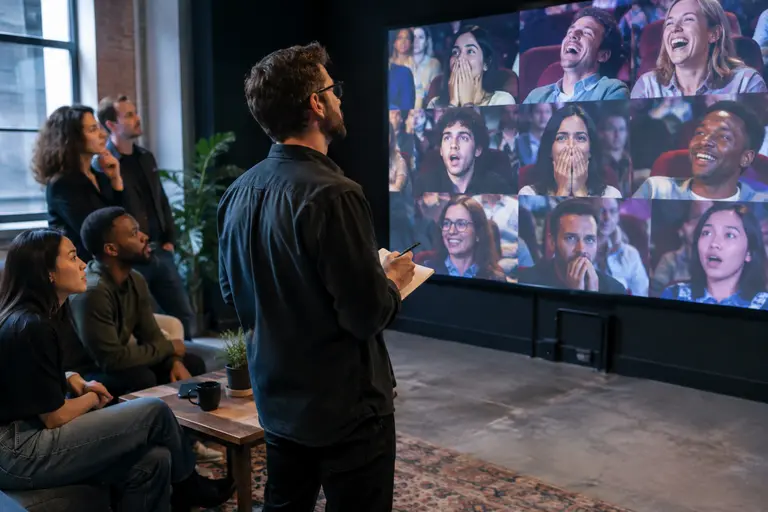
Market analysis: The audience-facing lesson is cautious. AFM 2026 Films may sound like a public release calendar, but most market projects are still moving through business stages. Some may change titles, dates, cast, partners, or sales status. Some may reach theaters, streaming platforms, or region-specific distributors. Others may remain in development longer than expected. For readers, the value is not in treating every title as a near-term viewing option. The value is in seeing what the industry believes can travel.
Opinion: The strongest pattern in the supplied slate is the balance between familiarity and tonal specificity. Familiarity comes from actors, sequel links, video game IP, and genres that buyers can explain in a sentence. Specificity comes from a 1930s literary drama, a body horror premise tied to motherhood and supplements, and a sci-fi escape story built around labor, survival, and conspiracy. The packages that stand out are not just large or star-led. They are legible.
Market analysis: For audiences, legibility shapes eventual marketing. If a buyer can describe a project clearly, a trailer campaign, streamer tile, festival blurb, or regional poster can often do the same. That does not make the film artistically stronger. It can make the path from sales meeting to viewer awareness easier. Readers interested in related screen-culture coverage across the same publishing network may also find Noir Whale useful for parallel analysis of media trends and audience behavior.
AFM 2026 Films And Audience Signals
What Can Be Said Before The Market Opens
Confirmed: As of November 9, 2026, AFM 2026 has not yet begun. The dates, venue plan, Summit timing, Sessions window, and AFM House schedule are the firmest public anchors in the supplied research. The film projects identified for the market include crime-thriller, period drama, body horror, sequel development, sci-fi, and large-scale fantasy adaptation packages. The research supports discussion of titles, listed talent, premises, reported budget range for Elden Ring, and the stated rights movement involving Amazon MGM Studios for multiple international pay-1 rights.
Market analysis: What cannot be said is just as important. No public-sales result from AFM 2026 can be assessed before the market opens. No audience reaction can be measured from this slate alone. No awards path should be assumed from cast, budget, or genre. AFM 2026 Films are best understood as early indicators of what sellers believe buyers need: recognizable concepts, flexible genre appeal, rights clarity, and enough cultural texture to make a project feel distinct in a crowded sales environment.
Opinion: The most useful way to read the 2026 market is as a pressure test. Which projects can explain themselves without feeling generic? Which rights packages already carry momentum? Which genres still look exportable? Which prestige dramas can make a commercial case before reviews exist? Those questions will not all be answered between November 10 and November 15, 2026. But the opening slate offers a grounded view of how film packages are being shaped before they reach the wider public.