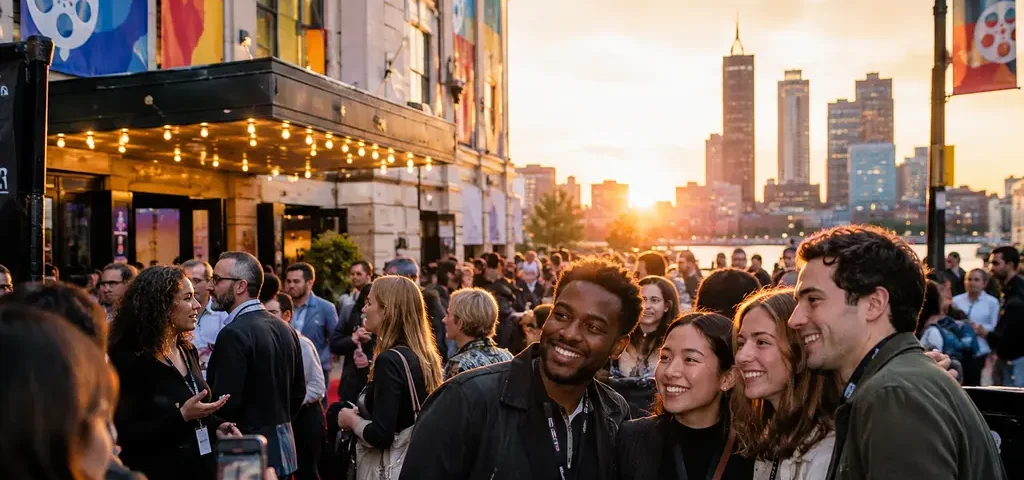
Confirmed: The Boston Film Festival took place from September 17 to 21, 2026, and its 42nd edition gave independent work a broad public frame after the event closed. The program included independent features, documentaries, shorts, animated films, fall studio releases, a new sports category, and four world premieres, according to a Time Out preview. That mix matters because the festival did not treat indie cinema as a narrow lane. It placed emerging directors, nonfiction makers, short-form artists, and studio-linked titles in one civic film program, which helped audiences compare scale, authorship, and cultural address without reducing the event to a single kind of prestige.
What The Boston Film Festival Changed In 2026
Program Breadth And Audience Access
Market analysis: The most visible shift in the 2026 edition was not one title alone, but the way categories signaled a wider idea of audience engagement. A new sports category widened the festival’s frame for viewers who may enter cinema through athletic biography, competition, or community memory rather than through conventional art-house pathways. The presence of fall studio release films beside independent features also created a shared audience space. That does not erase the difference between studio resources and indie production, but it can place smaller films near viewers who may not attend an exclusively independent showcase.
Confirmed: The research record identifies the edition as one that aimed to reflect diverse filmmaking voices across race, gender, genre, and theme while stressing stories with broad resonance. The available notes do not provide a full demographic breakdown of every filmmaker, so any claim about representation should stay cautious. What is supported is the pattern of recognition: awards went to features, documentaries, animated work, short fiction, short nonfiction, environmental storytelling, and a new filmmaker category. In festival terms, that distribution can be as important as a mission statement because prizes shape what audiences remember after screenings end.
Boston Film Festival Indie Recognition
Confirmed: The official awards list named Beneath the Blue Suburban Skies, directed by Ed Burns, as Best Film, and Burns also received the Boston Film Festival Award for Excellence in Cinematic Storytelling, one of two new awards introduced in 2026, as shown in the festival’s award winners. The second new award, Outstanding Achievement in Nonfiction Feature Filmmaking, went to Papertown, directed by Jeremy Seifert and Benjamin James Roberts. These choices show the festival building new language around craft and nonfiction, rather than relying only on long-standing prize categories.
Opinion: The storytelling award is especially revealing because it recognizes a feature director through a phrase that is broad enough to cover writing, performance direction, tone, and audience connection. That can be useful, but it also requires careful reading. It should not be treated as proof that one film defined the whole edition. It is better understood as a sign that the festival wanted to name a kind of narrative achievement that sits between a best-film prize and a career honor.
Women-Led And Emerging Work Gained Visibility
A New Director Award With Multiple Signals
Confirmed: A Minor Time, directed by Tina Alexis Allen, won Best New Director. The same film also received Best Actor for William Sadler and Best Actress for Judee Wales. At the Boston Film Festival, that cluster of prizes gave one emerging feature a multi-part form of recognition: direction, performance by an actor, and performance by an actress. The research does not provide production budget, distribution status, or jury comments, so the safest reading is limited but still meaningful. The film was not recognized in isolation as a promising debut; it was recognized across several areas of screen craft.
Market analysis: Best New Director awards carry weight for independent filmmakers because they help translate festival attention into a public credential. They can support future meetings, press coverage, and audience curiosity, though they do not guarantee distribution or long-term career stability. For a woman director, such a prize can also matter symbolically in a sector where recognition has often been uneven. That point should be made without overstating what one award can do. The supported fact is the win; the broader industry meaning remains an analytical reading of why such categories attract attention.
Audience Engagement Beyond The Red Carpet
Confirmed: Emerson College hosted panels that included a “Next Gen” panel featuring upcoming filmmakers Adi Roy, Maximo Salas, and Nathaniel Logan McIntyre. Warner Bros. Television Group also partnered on industry exposure for local students through panels and workshops. Those elements indicate that the festival placed education beside exhibition. The value here is not just access to well-known guests or institutions; it is the possibility that students could connect screen culture with practical pathways into film and television work.
Opinion: This is where festival coverage should resist easy praise and look at structure. A panel does not, by itself, create a career pipeline. Yet panels and workshops can give younger artists a clearer sense of how projects move from idea to screen, and how creative labor is discussed by working professionals. For readers comparing festival culture across related arts sites, Sitebob, a related site in the same network, is part of the same network, and that connection reflects how regional film discussion often travels across several editorial spaces rather than a single publication.
Documentaries And Shorts Expanded The Frame
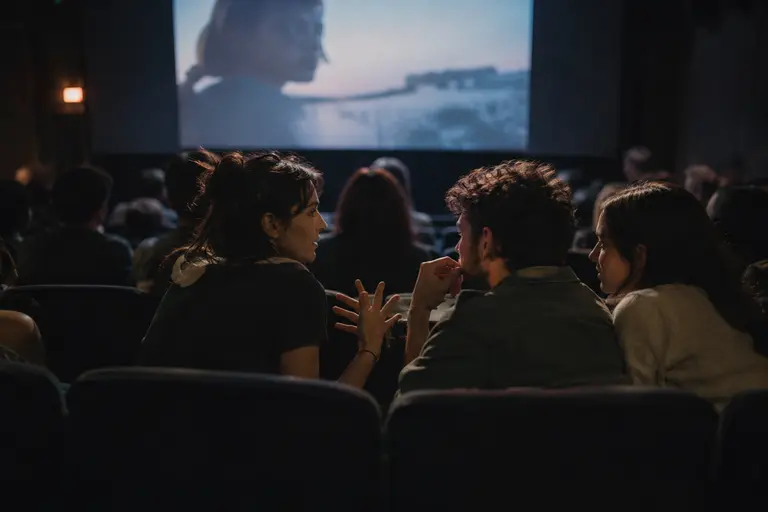
Nonfiction Prizes Carried Cultural Weight
Confirmed: Unleashed Spirits: The Rise of the Hollywood Vampires, directed by Daniel E. Catullo III, won Best Feature Documentary. Papertown won Outstanding Achievement in Nonfiction Feature Filmmaking. Tony Foster: Painting at the Edge, directed by David Schendel, won the Eco Film Award. These documentary honors point to a nonfiction slate that reached across music culture, investigative or issue-based feature work as identified by the title and award context, and environmental art storytelling.
Market analysis: The creation of a nonfiction feature achievement award gave the 42nd edition a clearer way to separate documentary recognition by function. Best Feature Documentary can honor the strongest documentary in a broad competitive sense, while an outstanding achievement award can call attention to nonfiction craft, reporting, access, or argument. The research notes do not identify the jury’s exact criteria, so the distinction should remain tentative. Still, adding such a prize suggests that nonfiction was not treated as a side category.
Short Films As A Point Of Discovery
Confirmed: Somewhere to Be by Christy Chan won Best Short Film, Birdsong by Michelle Cheng won Best Animated Short, and The Kid from Boston by Alex Stoddard won Best Short Documentary. Short-film awards often serve a different audience function from feature prizes. They introduce artists whose work may not yet have the distribution path of a feature, and they give viewers a compact encounter with voice, rhythm, and point of view.
Opinion: The short-film results were one of the clearest places where the festival’s diversity claim could be felt in form, not only in identity. Fiction short, animated short, and short documentary each ask audiences to watch differently. Animation can compress emotion and image in ways live action may not. Short nonfiction can tie a local subject to a broader cultural memory. A fiction short can function as a proof of voice, not just a condensed story. For a related regional reading, Biff Award’s coverage of independent voices in 2026 festivals makes a similar point about how smaller programs and prizes can renew audience attention around emerging makers.
Diverse Voices At The Boston Film Festival
Reviewed: The 42nd edition is best read as a festival that used awards, categories, panels, and short-form recognition to place diverse voices in front of Boston audiences after five days of screenings and events. The strongest evidence comes from the documented award spread: a woman filmmaker winning Best New Director, new recognition for nonfiction work, short-film prizes across fiction, animation, and documentary, and an education component involving students and emerging filmmakers. Those facts do not provide a complete map of representation, but they do support a cautious claim that the edition widened the kinds of films and makers receiving public attention.
Opinion: The Boston Film Festival mattered in 2026 because it treated indie film as a public conversation rather than a niche taste category. Its awards did not point in only one direction. They recognized established storytelling, a new director, nonfiction feature work, environmental cinema, animated short work, and student-facing industry exchange. That mix is not a final measure of inclusion, and it should not be inflated into proof that festival culture has solved its access problems. It does show how a regional festival can make audience engagement more open by honoring several kinds of authorship at once.